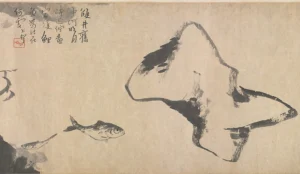
“Everything is regulated in all things once for all with as much order and agreement as possible, since supreme wisdom and goodness cannot act without perfect harmony; the present is big with the future, what is to come could be read in the past, what is distant expressed in what is near. The beauty of the Universe could be learnt in each soul, could one unravel all its folds which develop perceptibly only with time.” – Gottfried Wilhelm Liebniz, Principles of Nature and Grace, Philosophical Writings
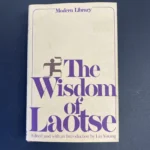 I thought it might be worthwhile to extract and rearrange portions of the Daodejing to demonstrate the depth of Laozi’s wisdom which challenged even Confucius. Be aware I will choose among the three translations in my possession the version I find most consistent with my particular understanding of Laozi’s message.
We begin at the beginning:
“The Tao that can be told of
Is not the Absolute Tao;
The Names that can be given
Are not the Absolute Names.”1
First we learn that the word Tao does not name a thing as such for Laozi, but only serves as a word referencing that which is responsible for the origin and processes of the universe.
“There was Something undefined and yet complete in itself,
Born before Heaven-and-Earth.
Silent and boundless,
Standing alone without change,
Yet pervading all without fail,
It may be regarded as the Mother of the world.
I do not know its name;
I style it ‘Tao’
And, in the absence of a better word, call it ‘The Great.’ ”2
Laozi reiterates ultimate reality is incomprehensible, magnificent, and finally beyond any human label. We also hear a bit of his cosmology.
“Thus Something and Nothing produce each other;
The difficult and the easy complement each other;
The long and the short off-set each other;
The high and the low incline towards each other;
Note and sound harmonize with each other;
Before and after follow each other.”3
Mysteriously Tao originates being and non-being as well as the innumerable mutually sustaining opposites which underpin the world. Everything is explained by the Way.
“The way is empty, yet use will not drain it.” 4
The Tao is also paradoxically nothingness and infinity, without substance but inexhaustible.
“The way begets one; one begets two; two begets three; three begets the myriad creatures.
The myriad creatures carry on their backs the yin and embrace in their arms the yang and are the blending of the generative forces of the two.”5
We have an almost Biblical description of the arising of the universe, unified by the yin and the yang.
“Of old, these came to be in possession of the One:
Heaven in virtue of the One is limpid;
Earth in virtue of the One is settled;
Gods in virtue of the One have their potencies;
 The valley in virtue of the One is full;
The myriad creatures in virtue of the One are alive;
Lords and princes in virtue of the One become leaders in the empire.
It is the One that makes these what they are.”6
Laozi again affirms the unity of the cosmos via the One, the Tao.
(continued next post)
——————————————-
1Yutang, Lin, The Wisdom of Laotse. The Modern Library, New York, NY, 1976. Page 41 (Chapter 1).
2Wu, John C.H., Tao Te Ching. Shambala Publications, Boston & London, 2003, ISBN 1-57062-961-7, page 53 (Chapter 25).
3Lau, D.C. (translator), Lao Tzu: Tao Te Ching. Penguin Books Ltd., Harmondsworth, Middlesex, England, 1963 (reprint dated 1986), Page 58 (Chapter 2).
4Ibid., page 60 (Chapter 4).
5Ibid., page 103 (Chapter 42).
6Ibid., page 100 (Chapter 39).
—————————————–
Having trouble leaving a question or comment? E-mail me at gregoryciliberti@gmail.com
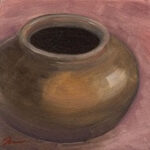 To reach this apex, one must eliminate desires – not in regards to life’s necessities, but rather the desires brought on by knowledge and concepts of beauty, goodness, merit or praise.7 Freed from striving and contention one arrives at the state of emptiness. Laozi uses the analogy of the empty vessel; its vacuity is the very characteristic which makes it useful.8 Signs of inward emptiness are calmness, humility, and meekness.9
 One who connects to ultimate reality in this way achieves apotheosis and becomes according to Laozi – a sage – not a saint or a hero as in the West, but perhaps a mixture of the two. The sage has deep knowledge of the Tao and of the cycle of life and death and thus enlightenment.19 In the end, the deep thinking and meditation of the sage allows one to model oneself on the Tao which is the ultimate goal of human life.
 “The unnoticeable law of the earth preserves in the sufficiency of the emerging and perishing of all things, in the allotted sphere of the possible which everything follows, and yet nothing knows. The birch tree never oversteps its possibility. The colony of bees dwells in its possibility.” – Martin Heidegger, The End of Philosophy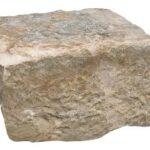
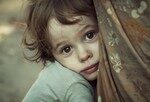 The second nuance is wu wei which we may translate as both effortless activity and virtuosity (excellent action). Wu-wei is instinctual or intuitive activity which is in harmony with the world and free of self-consciousness, cultural influences, and excessive deliberation. Laozi uses the example of the simplicity and humility of a child, and the metaphor of the uncarved block of wood (that is, unchanged by external molding). Wu wei is also the harmonious mixture of yin and yang. Human excellence occurs when one spontaneously puts oneself last so that, as in the case of water, one’s actions benefit all, and thus most resemble the Way. Mastery is indicated by perceptiveness, caution, unpretentiousness, spirituality, and sympathy for all things.3
 However, beneath the surface, we see that opposites are reciprocally defining, thus, for example, we cannot understand beauty without ugliness, love without hate, or goodness without evil. In short, all presumed opposites are inseparable and complementary, and finally interchangeable – consider life and death.10 Stated somewhat differently, all opposites hinge on attributes which are in fact relative; only Tao is Absolute.11 Moreover Tao adjudicates the opposites; especially yin and yang; balancing the converse poles through a dynamic reversion that perpetually resolves all propensity to extremes.12 In this way, the opposites, regulated by Tao, instantiate the eternal cycles that pervade the unity of the cosmos.
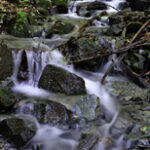 Endurance, not striving, is the means to continuation. He also uses the powerful metaphor of water: “its excellence is seen in its benefiting all and occupying without dissent the lowest place which none chooses.”13 Here is revealed another tenet of Laozi’s philosophy, the priority of yin over yang, the passive over the active.
 “I recognized that then that in this book is the perfect source of all things. It is the sublime Master of Kings and the inestimable Treasure of the people” – Zhu Yuanzhang, founder of the Ming Dynasty in 1368, speaking of the Daodejing.1
 Laozi’s metaphysics is a monism circumscribed by the fundamental doctrine that there is a unity of everything in the universe pervaded by Tao or the Way (perhaps best understood as the Way of Nature).2 Tao is the source and principle of all things including yin and yang, and being and non-being.3 It is ontologically prior to the things of the world and in that sense, is the First Cause.4
 Li Ehr (the possibly fabulous Laozi), so the tale goes, found himself the historian (or librarian) in charge of the archives of the state of Chou from which he may have drawn much of his knowledge and wisdom. Ssu-ma Ch’ien records Laozi’s encounter with Confucius while still in that position. It feels remiss to omit this account of what is admittedly most likely a fictional meeting of the two greatest masters in Chinese history.
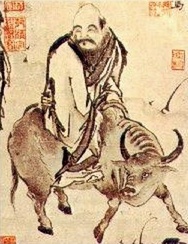 Whatever the case, the story of Laozi’s life story continues when, later, seeing the decline of that state, he decides to leave. Before departing, he comes upon the ‘Keeper of the Path’ who asks him to record his wisdom. After a period of 2-3 weeks, he leaves that man two short books, the Tao ching (Book 1 of 37 chapters) and the Te ching (Book 2 of 44 chapters) combined as 81 chapters of about 5000 Chinese symbols altogether, and now known as the Daodejing. Supposedly he is last seen outward bound on the back of an ox after which he lives to an old age (at least 87, though undoubtedly not 160 as some have claimed).
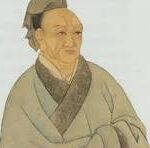 “…Confucius told his disciples, ‘I know a bird can fly, a fish can swim, and an animal can run. For that which runs a net can be made; for that which swims a line can be made; for that which flies a corded arrow can be made. But the dragon’s ascent into heaven on the wind and the clouds is something which is beyond my knowledge. Today I have seen Lao Tzu who is perhaps like a dragon’ ” – Ssu-ma Ch’ien, the Shih chi (Records of the Historian)1
 It is worth noting thst the problem here is the absence of first-hand or even contemporary accounts of Laozi. Most of my sources place him as an elder contemporary of Confucius (551-479 B.C.E.) although some scholars think he lived later than Confucius. According to the former account, mostly derived from the writings of the great early Chinese historian, Ssu-ma Ch’ien (Sima Qian), he was born in the early 6th century B.C.E. (? 571 B.C.E. making him 20 years senior to Confucius) in the Li village of Hu Hsien in the state of Chou (Ch’u). His surname is thought to have been Li and his personal name Ehr.2
 THE RECEPTIVE
 Thus the second hexagram offers an alternative type of human ascendancy; that of the supporting cast under those who lead according to the Way. Excellence, it turns out, can be gentle steadfastness and positivity, coupled with honesty, fidelity, righteous behavior, and humility.
 “When the reality of the non-ultimate [non-existent] and the essence of yin, yang, and the Five Agents come into a mysterious union, integration ensues. Ch’ien (heaven) constitutes the male element, and K’un (earth) constitutes the female agent. The interaction of these material forces engenders and transform the myriad things. The myriad things produce and reproduce, resulting in unending transformation.” – Chou Tun-i1
  “The creative originates, develops, perfects, and consummates.”3 We are told creativity is the essence and sense of nature, perpetually strong, also called heaven. As the central power of the universe it can be seen as God and in subtle form as spirit. It is also Nature, the origin of all things, the positive principle and perfection.
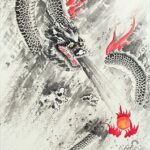 The fifth yang, symbolized by the flying dragon, is the sage as leader and as an example to others.
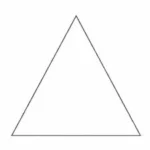 The I Ching tells us that change is the only constant in realty – the one aspect of it we all must accept, embrace, and factor in all our endeavors. Ultimate reality seems to be distilled into an equilateral triangle with nature, cosmos, and humanity at its three vertices within which continual change occurs.25 We also see ultimate reality involves polarities, especially yang and yin, but also motion and rest, macrocosm and microcosm, alternation and transformation – all of which are instantiated in change. The analogy to ‘being’ and ‘becoming’ in Western philosophy jumps out at us. The I Ching also uses symbols (not unlike in the West – consider numerals and musical notes) to show that change is not chaotic, but informs a mathematical order and musical harmony within the universe. Cosmologists and philosophers alike can appreciate this characterization of ultimate reality.