 “Immortality is what nature possesses without effort and without anybody’s assistance, and immortality is what the mortals must therefore try to achieve if they want to live up to the world into which they were born, to live up to the things which surround them and to whose company they are admitted for a short while.” – Hannah Arendt, Between Past and Future.
In the last four posts we saw hat Zhuangzi understands Tao as absolute Truth, the fundamental principle of the universe, the origin of all being, the unending cycle of Nature, and the highest ideal. We also learned that for him participation in Tao entails discovering our hsing or true nature as spiritual beings through meditation, jettisoning abstract ideas, and non-interference in the course of things culminating in total freedom and salvation. Today I wish to fold in Zhuangzi’s thoughts on death and immortality.
We start this subject with his most basic belief: death is a natural part of life – just one of its infinite transformations.1 The perfectly adjusted individual remains balanced despite the inevitability of death as illustrated by the famous story of his celebration of his wife’s death when he tells his friend Hui Tzu:
“In the midst of the jumble of wonder and mystery a change took place and she had a spirit. Another change and she had a body. Another change and she was born. Now there’s another change and she’s dead. It’s just like the progression of the four seasons…”2
In another such story, he imagines the words of a disciple of Laozi regarding the Master’s death:
 “When the Master came, it was because he was due to be born. When he died, it was entirely natural. If you are prepared for this and flow with it, then sorrow and joy cannot touch you…We can point to the wood that has been burned, but when the fire has passed on, we cannot know where it has gone.”3
Zhuangzi is reminding us that it is useless to set oneself against what is natural or inevitable. Rather one must adopt a different perspective, that is, death is simply another natural transformation.4 Fear of death and grieving for the dead assumes a knowledge of death which we do not have.5 On the other hand, the enlightened individual understands that one lives as long as one’s essence, the Tao, lives and it is eternal.6
Zhuangzi explains the mystical route to immortality: the True Man by ‘fasting” the mind and “contemplating on emptiness” achieves union with the Tao and taps into the mysterious power of Nature…the True Man is ethereal.7 In other words, alignment of oneself with the perfect rhythm of the Way results in transcendence of life and death.
Next time we conclude this section with my comments on Zhuangzi’s philosophy.
—————————————–
1McGreal, Ian P. (editor) Great Thinkers of the Eastern World. HarperCollinsPublishers, New York, 1995. ISBN 06-270085-5, page 21.
2Ibid., page 24.
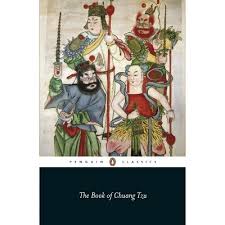
3Palmer, Martin (translator), The Book of Chuang Tzu. Penguin Books, New York, 2006, ISBN-13; 978-0-140-45537-3, pages 24.
4McGreal, Ian P. (editor) Great Thinkers of the Eastern World. HarperCollinsPublishers, New York, 1995. ISBN 06-270085-5, pages24-25.
5Magill, Frank N. and McGreal, Ian P. (editors), Masterpieces of World Philosophy. HarperCollinsPublishers, 1990. ISBN 0-06-270051-0, page 99.
6Ibid., page 97.
7Ibid., page 99.
—————————————–
Having trouble leaving a question or comment? E-mail me at gregoryciliberti@gmail.com
 We learn that the Perfect Man (some translate this as the Transcendental Man, still others as the True Man) “is a spiritual being…death and life have no dominion over him…”4 This person retains the unspoiled simplicity of a child and avoids political action allowing the Tao to take its course.5 Zhuangzi offers the example of a butterfly which follows the breeze yet arrives at the flower. Likewise, the sage sits “in the world” at the center.6 and acts without calculation or plans, having no regrets, and expecting no praise.7 Theirs is the way of Peace8 maintaining a perfect spiritual rhythm in the Way.9 Tao is impartial, so is the Sage.10
 What are its features? They are purity of heart, calmed emotions, simplicity, detachment, and leisureliness.14 They coalesce in salvation which comes from knowledge of the self and acquiescence to one’s place in the world.15 For Zhuangzi, the only way to salvation is to identify oneself with the orderly process of all being, the Tao.16
 “How could things have been as they are, were not there an original, inherent principle of order somewhere, in thought or in matter?…Every thing is surely governed by steady, inviolable laws. ” – David Hume, Dialogues Concerning Natural Religion.
 Because of Tao, everything is involved in a universal cyclic motion, but in one sense, humans are unique: by identifying with Tao they can attain the axis of the wheel from which to observe the perpetual disturbance in the universe with transcendental calm. 6
 We continue now with Zhuangzi’s epistemology already having discussed his thoughts on perspectivism, the limits of language, the inadequacy of human logic, and the folly of philosophical debate.
 “Separation leads to completion, from construction ensues destruction. Yet all things in spite of their construction and destruction may again be perceived in their identity. Only the wise understand this, and they can place themselves in subjective relation with the ordinary way of looking at things. Wherefore, the truly wise man while regarding contraries as identical adapts himself to the laws of Heaven and follows the two courses at once.”21
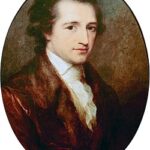 I declare myself to be of those who from the darkness to the light aspire.” – Goethe1
 Zhuangzi uses the example of our distinction between opposites such as right and wrong or men and things which he tells us are false once the Tao is recognized.7 In addition, the relativity of things is not unequalness as all follow the Tao, but since each thing varies as seen by itself and by others, there is no absolute “this” or “that.” In the end Zhuangzi thinks logic is nonsense compared to experience of the Tao.9
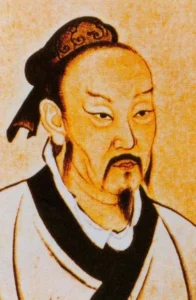 “This, too, is Nature’s way.” – Zhuangzi
 While less aphoristic and more extended than the Daodejing, the Chuang Tzu presents a mix of parables, poetry, imaginary dialogues, and metaphorical stories rather than a methodologic system. Some experts see Zhuangzi’s work as an exploration and interpretation of the Daodejing, while others feel it is more original. Whatever the case, the text features sufficient epistemology, logic, analogy, and dialectic to delineate Zhuangzi’s philosophical thinking.
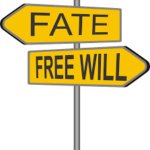 Laozi leaves no doubt; increased striving and movement outside the guardrails of natural processes is counterproductive to the purpose instantiated in the universe. In this sense Tao informs one of humanity’s great opposites, freedom and fate. We can choose freely whether to follow Tao with its sheen of determinism or not to follow the Tao and hazard the unanticipated consequences.3
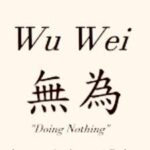 Laozi calls this human summit, the Sage, that is one who participates fully in ultimate reality as both the saint in his or her selflessness, sympathy, and humility, and the hero as the guarded wise actor in Nature who serves as a paradigm for others. This, I believe, is the second kind of change described in the I Ching – transformation.
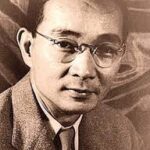 “The thought has been constantly on my mind to find a religion that is acceptable to a scientist.” – Lin Yutang, in his introduction to the Daodejing.1
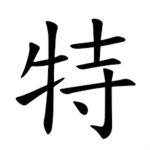 Tao, via its power or Te, also regulates the dynamic reversion (interchangeability) of the opposites thereby producing the eternal cycles of the universe, that instantiate the first kind of change in the I Ching – alternation. By this process and as that which turns all things from outward to inward, Te is the unifying force in the cosmos as well. In short Tao/Te informs the mathematical harmony of reality described by the I Ching. However it is worth pointing out that Tao is not God as person in either text.
 To know when you have enough is to be immune from disgrace,
 “It has been said that he who is a good preserver of his life
 Makes them grow, develops them,