
 “The desire for peace is the mark of all civilized men and women.” – Henry Kissinger, 1973 Nobel Peace Prize Laureate.
In the last four blogs we looked in some detail at ultimate reality as schematized by Alfred North Whitehead, the last major philosopher to formulate such a system. Whitehead is convinced that our primary experience of the world comports best with a metaphysical structure that conjoins modern scientific cosmology with a philosophy of organism and creativity. To this he adds a speculative element of divine wisdom and agency which transforms potentiality to actuality and envelops and integrates feelings, of which the most important is love.
Humans, as actual entities, are an integral element of Whitehead’s cosmic organism, but a more expansive participation is attainable in exchange for greater diligence guided by insight. That is, consciously or unconsciously we are part of the organism and of creative advance, and we serve as components of interdependent nexūs, and we share feelings that influence and are influence by God. However, a greater consciousness of the nature of the world offers opportunities for higher impact. There are at least four interlocking levels on which we enhance our connection (in rough order of degree): general, religious, creative, and cultural.
GENERAL
The two general aspects of connection are Nature and Immortality.
NATURE
 At the simplest level humans are a part of Nature not mere cultural beings. Like all physical bodies we are made up of ‘societies’ of actual entities, for example our constituent molecules, and contribute to ‘societies’ such as our immediate environment. In addition our perceptions participate in nature. “According to the philosophy of organism, physical and mental operations are inextricably intertwined; also we find the sense functioning as forms participating in the vector prehensions of one occasion by another…mental operations transmuting the functions of sense as to transfer them from being participants in causal prehensions into participants in presentational prehensions. But throughout the whole story, the sensa are participating in nature as much as anything else.”1 The same applies to feelings: “The actual entities of the actual world are bound together in a nexus of these feelings.”2
But there is more; humans can achieve the intellectual conquest of Nature through science, mathematics, and measurement. From these efforts we learn of the “order of nature,” its continuous changing and adapting for attainment of an end – the end always being the “satisfaction of societies.”  Nevertheless, we see that “nature is never complete, it is always passing beyond itself.”3 On the one hand we come to a metaphysics where final (teleologic/philosophical) and efficient (mechanical/scientific) causes are properly correlated. On the other, in a transcendental leap, as Lytton Strachey surmised the most obvious characteristics of nature are “loveliness and power.”4
(continued next post)
——————————————————————–
1Whitehead, Alfred North, Process and Reality. The Free Press, New York, 1978. ISBN 0-02-934570-7, page 327.
2Ibid., page 238.
3Ibid., page 289.
4Whitehead, Alfred North, Adventures of Ideas. The Free Press, New York, 1973.Page 11.
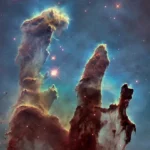 On the one hand there is a physical component of creation. At this level God is the principle actor, initiating a continuous process of potentiality becoming actuality, wherein elements are synthesized into new unities or “concrescences”. On the other hand, within the universal organism (and guided by divine wisdom), nexūs undergo process leading to novelty. Whitehead calls the emergence of the new the “creative advance.”
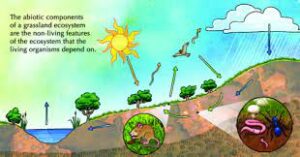 Whitehead asserts science and experience inform us that each event in the universe is a factor in every other event such that “all things ultimately inhere in each other”12 – there are no isolated events. The real world then is an interdependency of interrelated parts more descriptive of an organism than a machine. Moreover all occasions develop within the spatio-temporal continuum and are qualified in past, present, and future. New actual entities arise from prior occasions and eventually themselves perish, but not before being objectified by still later occasions.
 Instead he suggests all “concrete enduring entities are organisms, so that the plan of the whole influences the very characters of the various subordinate organisms which enter into it.” Consequently “this doctrine involves the abandonment of traditional scientific materialism, and the substitution of an alternative doctrine of organism.”15 He justifies this further by pointing out how modern science has replaced the primacy of ‘mass’ with that of ‘energy.’ Energy, it turns out, is fundamental, but energy “is merely the name for the quantitative aspect of a structure of happenings: in short, it depends on the functioning of organism.”16


