
Te is not only the means by which Tao unifies all things, but also the impetus for the turning of things from outward to inward.4 The blending of quiescence and wu wei and the inward turning result in mind and spirit being held in a unity.5 Masters of the Way are inwardly empty of oneness in order to be open for that which is the “One in All and the All in One.”6 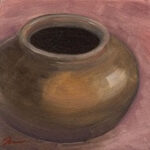 To reach this apex, one must eliminate desires – not in regards to life’s necessities, but rather the desires brought on by knowledge and concepts of beauty, goodness, merit or praise.7 Freed from striving and contention one arrives at the state of emptiness. Laozi uses the analogy of the empty vessel; its vacuity is the very characteristic which makes it useful.8 Signs of inward emptiness are calmness, humility, and meekness.9
Laozi guides us down the path of Te. It begins with adopting a natural morality: (1) hiding oneself in the lap of nature, (2) trustful acceptance of nature’s processes, and (3) the imitation of nature’s silent ways.10 One discovers the most effective way to solve problems or adversity is not by contention, but by yielding which does not mean submission or capitulation, but the taking of the “way” of least resistance.11 Laozi tells us: “To hold first to the submissive is called strength.”12 This includes knowing self-restraint and what it means to be truly content, especially by learning to abandon desires and to place oneself last. The lesson is almost Kantian: “A man can achieve his own happiness only by pursuing the happiness of others…”13
We revisit the Taoist paradox; outward inactivity and passivity (unseeming and unstriving), the absence of fixed purpose, and subjecting oneself to the Law permits the right outcome. “Do nothing and everything is done.”14 It turns out “Quiescence (philosophical inaction) is the Master of Motion.”15 But one must never forget: one deserves neither credit nor blame for the results of following the Way. On the contrary one is blameworthy for the bad outcomes when one fails to follow the way.16
Following Laozi’s guidance one can reach a state of contemplation that radiates virtue, the ‘Inner Princedom’ and the ‘Kingdom of Heaven.’17 Heaven is “within the deep realizations and secrecies of spirit.”18  One who connects to ultimate reality in this way achieves apotheosis and becomes according to Laozi – a sage – not a saint or a hero as in the West, but perhaps a mixture of the two. The sage has deep knowledge of the Tao and of the cycle of life and death and thus enlightenment.19 In the end, the deep thinking and meditation of the sage allows one to model oneself on the Tao which is the ultimate goal of human life.
I end with two poignant quotes:
“Life is lived well only when man is completely in tune with the whole universe and his action is the action of the universe flowing through him.”20
“To him in whom is this harmony, the secret of the Eternal is known, Wisdom is throned upon it.”21
—————————————–
4Zaehner, R.C., Encyclopedia of the World’s Religions. Barnes & Noble Books, New York, 1997. ISBN 0-76070-712-X, page 376.
5Beck, L. Adams, The Story of Oriental Philosophy. The New Home Library, New York, 1942. Page 347.
6Ibid., pages 349.
7Lau, D.C. (translator), Lao Tzu: Tao Te Ching. Penguin Books Ltd., Harmondsworth, Middlesex, England, 1963 (reprint dated 1986), Page 35.
8Koller, John M., Oriental Philosophies. Charles Scribner’s Sons, New York, 1970. ISBN 684-13668-6, page 237-238.
9Yutang, Lin, The Wisdom of Laotse. The Modern Library, New York, NY, 1976. Page 14.
10Durant, Will, Our Oriental Heritage. Simon and Schuster, New York, 1963. ISBN0-671-54800-X, page 652.
11McGreal, Ian P. (editor), Great Thinkers of the Eastern World. HarperCollinsPublishers, New York, 1995. ISBN 0-06-270085-5, page 11.
12Lau, D.C. (translator), Lao Tzu: Tao Te Ching. Penguin Books Ltd., Harmondsworth, Middlesex, England, 1963 (reprint dated 1986), Page 29.
13Ibid., pages 39-40.
14Yutang, Lin, The Wisdom of Laotse. The Modern Library, New York, NY, 1976. Page 12.
15Beck, L. Adams, The Story of Oriental Philosophy. The New Home Library, New York, 1942. Page 351.
16McGreal, Ian P. (editor), Great Thinkers of the Eastern World. HarperCollinsPublishers, New York, 1995. ISBN 0-06-270085-5, page 12.
17Beck, L. Adams, The Story of Oriental Philosophy. The New Home Library, New York, 1942. Pages 352-353.
18Ibid., page 352.
19McGreal, Ian P. (editor), Great Thinkers of the Eastern World. HarperCollinsPublishers, New York, 1995. ISBN 0-06-270085-5, page 14.
20Koller, John M., Oriental Philosophies. Charles Scribner’s Sons, New York, 1970. ISBN 684-13668-6, page 237-233.
21Beck, L. Adams, The Story of Oriental Philosophy. The New Home Library, New York, 1942. Page 354.
—————————————–
Having trouble leaving a question or comment? E-mail me at gregoryciliberti@gmail.com
 “The unnoticeable law of the earth preserves in the sufficiency of the emerging and perishing of all things, in the allotted sphere of the possible which everything follows, and yet nothing knows. The birch tree never oversteps its possibility. The colony of bees dwells in its possibility.” – Martin Heidegger, The End of Philosophy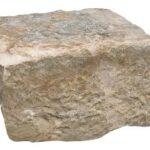
 The second nuance is wu wei which we may translate as both effortless activity and virtuosity (excellent action). Wu-wei is instinctual or intuitive activity which is in harmony with the world and free of self-consciousness, cultural influences, and excessive deliberation. Laozi uses the example of the simplicity and humility of a child, and the metaphor of the uncarved block of wood (that is, unchanged by external molding). Wu wei is also the harmonious mixture of yin and yang. Human excellence occurs when one spontaneously puts oneself last so that, as in the case of water, one’s actions benefit all, and thus most resemble the Way. Mastery is indicated by perceptiveness, caution, unpretentiousness, spirituality, and sympathy for all things.3
 However, beneath the surface, we see that opposites are reciprocally defining, thus, for example, we cannot understand beauty without ugliness, love without hate, or goodness without evil. In short, all presumed opposites are inseparable and complementary, and finally interchangeable – consider life and death.10 Stated somewhat differently, all opposites hinge on attributes which are in fact relative; only Tao is Absolute.11 Moreover Tao adjudicates the opposites; especially yin and yang; balancing the converse poles through a dynamic reversion that perpetually resolves all propensity to extremes.12 In this way, the opposites, regulated by Tao, instantiate the eternal cycles that pervade the unity of the cosmos.
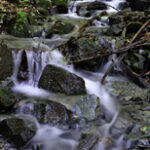 Endurance, not striving, is the means to continuation. He also uses the powerful metaphor of water: “its excellence is seen in its benefiting all and occupying without dissent the lowest place which none chooses.”13 Here is revealed another tenet of Laozi’s philosophy, the priority of yin over yang, the passive over the active.


