
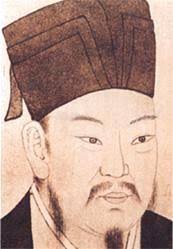
 “When the reality of the non-ultimate [non existent] and the essence of yin, yang, and the Five Agents come into mysterious union, integration ensues. Ch’ien (heaven) constitutes the male element and K’un (earth) constitutes the female element. The interaction of these two material forces engenders and transforms the myriad things. The myriad things produce and reproduce, resulting in unending transformation.” – Zhou Dunyi1
Having reviewed the historical context of Chinese philosophy that led to the blending of Confucianism, Taoism, and Buddhism into the enduring tradition of Neo-Confucianism, our next steps are to examine specific thinkers who contributed to its metaphysical foundations starting with Zhou Dunyi (Chou Tun-i), the “father” of Song dynasty Neo-Confuciansim. He was born at Yangdao in Daozhou (modern state of Huan) in 1017 and lived until 1073. He was both a magistrate and a professor, known for his love of all life. His major works were Taijtu or An Explanation of the Diagram of the Great Ultimate and Tongstu or Penetrating the Book of Changes.2
Zhou starts by discarding one feature of earlier Taoist thought, the negative side of Tao as non-being, perhaps as it approximates too closely Buddhist thought which the Neo-Confucianists hoped to replace. Instead he speaks of the T’ai-chi or the Great Ultimate as the source of all things starting with the forces of yin and yang. The primeval Great Ultimate is active hence the source of yang, but as it exhausts itself becomes tranquil generating yin. The interaction of these two in turn leads to the Five Elements (also called the Five Phases) – water, fire, wood, metal, and earth – which are not things as such, but the principles of things. Their interactions proceed to create the rest of reality.3 We have perhaps our first complete Chinese cosmology which explains how the many are ultimately One and the means by which the One is differentiated in the many.4
Zhou introduces us to the Diagram of the Great Ultimate, a symbolic representation of these propositions hauntingly similar to the Kabbalah of Jewish mysticism.
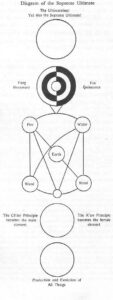
At the top is the mystic phrase: “The Ultimateless and yet the Great Ultimate” above an empty circle. Just below is the black and white banded circle, representing both the Great Ultimate and its progeny yang or movement and yin or quiescence. Beneath this is the web of interconnectivity of the Five Elements which are above another circle with the qian (ch’ien) or the male principle on the left and the kun (k’un) or yin or the female principle on the right. The lowest circle symbolizes the production and transformation of the myriad things engendered by the circle above.5
(continued next post)
—————————————–
1Koller, John M., Oriental Philosophies. Charles Scribner’s Sons, New York, 1970. ISBN 684-13668-6, page 255.
2McGreal, Ian P. (editor) Great Thinkers of the Eastern World. HarperCollinsPublishers, New York, 1995. ISBN 06-270085-5, page 104.
3Koller, John M., Oriental Philosophies. Charles Scribner’s Sons, New York, 1970. ISBN 684-13668-6, page 254.
4Edwards, Paul (editor), The Encyclopedia of Philosophy. Macmillan Publishing Co., Inc. & The Free Press, 1972. Volume 2, page 92.
5McGreal, Ian P. (editor) Great Thinkers of the Eastern World. HarperCollinsPublishers, New York, 1995. ISBN 06-270085-5, page 105.
—————————————–
Having trouble leaving a question or comment? E-mail me at gregoryciliberti@gmail.com
 We pick up now with our overview of the Chinese tradition of Neo-Confucianism. After the fall of the Han dynasty in the 3rd century C.E., Taoism and Buddhism became dominant while Confucianism waned. This dominance lasted until the end of the Tang dynasty which declined after the An Lushan Rebellion (755-763) and finally fell in 907 leaving a fragmented and chaotic China. Meanwhile Han Yu (768-824), a government official, had written an influential text, Essentials of the Moral Way (or An Inquiry on the Tao) in 805, in which he promoted a return to Confucianism, although he was exiled thereafter.1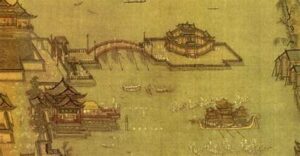
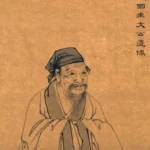 “Nature is nothing else than Law.” – Chu Hsi1
 We will start with a review of the history of the origination and progression of Neo-Confucian thought. We then take up critical metaphysical thinkers in rough chronological order, starting with Zhou Dunyi and Zhang Zai and their concepts of the Great Ultimate and Neo-Confucian cosmology followed by the Cheng brothers with their emphasis on human nature as proxy of the principle of the world. Thereafter we will meet Zhu Xi who professes a dualist metaphysics of principle and material force followed by Wang Yangming who focuses on goodness and moral action. Last we will look briefly at the contributions of a few less consequential, but still notable thinkers and end with a summary and synthesis.


