
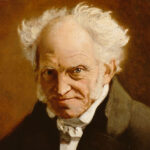
 “In the whole world there is no study so beneficial and elevating as that of the Upanishads. It has been the solace of my life. It will be the solace of my death.” – Arthur Schopenhauer1
————–
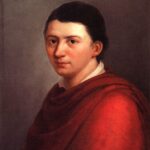 “Even the loftiest philosophy of the Europeans, the idealism of reason as set forth by the Greek philosophers, appears in comparison with the abundant life and vigor of oriental idealism like a feeble Promethean spark against the full flood of sunlight. It is faltering, weak, and ever ready to be extinguished. What distinguishes the Vedanta from all other philosophies is that it is at once religion and philosophy. In India the two are inseparable.” – Friedrich Shlegel.2
Last time we examined the earliest religious texts of ancient India, the Vedas, noting that their initial polytheism and superstition gave way to a near monotheism and divine ethics. I closed by noting the successor texts, known as the Upanishads, present some of the most fascinating philosophy in human history. The two epigraphs above are my attempt to dissuade the reader from thinking this mere hyperbole. Clearly philosophers of far greater standing than me have appreciated the sublime thought which I hope to precís in these next series of posts.
It is impossible to know when the Upanishads appeared, but it was after the Aryan invasion and most authorities believe they were written starting circa 800 B.C.E. and continued until at least the time of the Buddha perhaps 300 years later. There are ten chief Upanishads and their authorship is unknown.3 Their conclusions are often restated in aphorisms known as Sutras (literally ‘threads’)4
 In opposition to Greek philosophy, the Upanishads deny that the life and consciousness of man is bound by logical reason. Self-consciousness is limited and ultimately bedazzled by super-consciousness (mystic experience?), which is the optimal means to perceive the fundamental order of the universe. The utmost reach of this thought is the basis for the six divisions within Indian philosophy.5
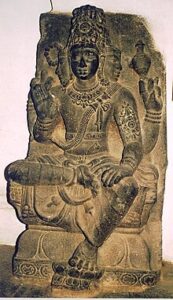
However there is general agreement on an eternal cosmic rhythm of Creation, Maintenance, and Dissolution. The eternal Brahma meditating in darkness brings about the Thought by which the universe proceeds. Later thinkers attribute this cycle to a divine Trinity: Brahma the creator, Vishnu the Maintainer, and Shiva the Destroyer.6 Each cosmic cycle ends in a‘Night of Brahma’ after which a refashioned universe emerges in a process of continual evolution. This same process is mirrored in the cycle of human life where reincarnation progressing through the ‘baptism of death’ brings about evolution of the soul. Consider the Kartha Upanishad:
“Never the spirit was born; the spirit shall cease to be never.
Never was time it was not. End and beginning are dreams.
Deathless and birthless and changeless abideth the spirit forever.
Death cannot touch it at all, dead though the house of it seems.”7
(continued next post)
————————————————
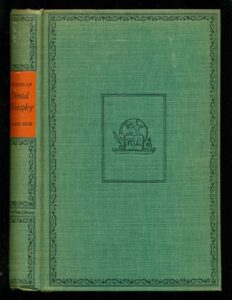
1Beck, L. Adams, The Story of Oriental Philosophy. The New Home Library, New York, 1942. Page 42.
2Ibid.
3Ibid.
4Ibid., page 43
5Ibid., page 44. Space and time prevent me from going into depth on the different divisions. Interested readers may check out The Encyclopedia of Philosophy Volume 4 pages 155-160.
6Ibid., page 44-45.
7Ibid., page 46. The western philosopher should remember that reincarnation was also a fundamental belief of both Pythagoras and Plato.
—————————————–
Having trouble leaving a question or comment? E-mail me at gregoryciliberti@gmail.com
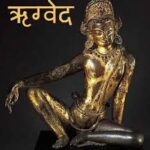
 The Rig Veda is the oldest of the Vedas and considered the most important as it poses the great questions of existence, creation, and death. It consists of 1028 hymns in about 10,000 stanzas full of wonder, awe, and humility. The source of creation is at first unclear (see epigraph last post), but later attributed to a personal creator, Prajapati, who self-divided to bring about the sky, earth, sun, air, and wind. The thirty-three gods were created at this time as well. One special god is Indra who protects the ancient Indians in battle, not unlike Jehovah in the Hebrew tradition.
 The Vedas represent the nascent beliefs of an evolving culture and yet clearly begin a process of questioning, reflection, and ethical awareness. The stage is set for the Vendata (‘the End of the Vedas’) – or post-Vedic thought expressed in the Upanishads. We pick up there next time – join me for some of the most fascinating philosophy in human history.
 “Who knows for certain? Who shall here declare it? Whence was it born, and whence came this creation? The gods were born after the world’s creation: Then who can know from whence it has arisen? None knoweth whence this creation has arisen: And whether He has or has not produced it: He who surveys it in the highest heaven, He only knows, or perhaps even he may know not.” – Rig Veda, (Creation Hymn).1
 There are four extant Vedas: (1) Rig Veda – hymns of praise, (2) Sama Veda – melodies and music, (3) Yahur Veda – sacrificial formulas, and (4) Atharva veda – magic formulas, superstition, and folklore. Each is divided into four sections: (1) Mantras or hymns, (2) Brahmanas or manuals of ritual, prayer, and incantation for priests, (3) Aranyaka – ‘forest texts’ for hermits, and (4) the Upanishads for philolsophers.6 The religion of the Vedas is often called Brahmanism to distinguish it from later Hinduism.7
 Dharma refers to the duties of the individual especially as instantiated in the moral structure of the universe.4 It is first outlined in the Dharma-Shastras where the concern is with regulation of the life of the individual and society in respect to specific codes of action.5 In addition to class (occupational or societal) functions, dharma includes – according to the Mahabharata6 – controlling anger, telling the truth, forgiving others, begetting offspring with one’s legitimate spouse, pure conduct, avoidance of quarrels, maintenance of dependents, acting justly, not hurting others, and self-restraint7 (Westerners might see this as the Hindu equivalent of the Ten Commandments).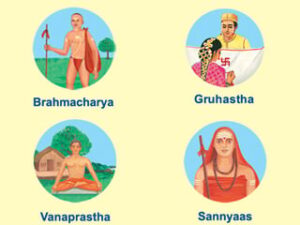
 “Therefore, control your senses and your mind.
 Given the materials I possess, I can explore some of these topics using only summaries by experts in the field, while for others I have only modern English translations of the original texts. Since Western summaries of Hindu thought and translations from the original Sanskrit are manifestly imperfect, more knowledgeable readers must excuse any deficiencies in my final understanding (and comments are of course welcome). I am also limited by time; many of these sources are voluminous, thus I will of necessity be forced to pick and choose what I sense are the more significant sections for study. Nonetheless, I hope to end on a satisfactory synopsis and final synthesis despite these limitations.
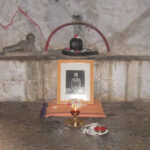 His internal virtues of desirelessness and wisdom and his external virtues of humility and freedom from avarice and ill-will towards others is elegantly succinct. His theological assertions of a divine order or pattern underpinning the universe and the blessedness that comes from our alignment with it is profound. And his emphasis on meditation using the mantra of Self-enquiry, “Who am I?” will surely permit some followers to achieve his notion of ‘illumination.’
 But perhaps the greatest divergence between East and West comes down to differences in their traditional concepts of enlightenment. For the Maharshi, as for most Eastern spiritualists, enlightenment is total tranquility and the direct experience of oneness of self and cosmos, while in the West it refers to refined knowledge and understanding of the many aspects of reality. I believe the practical philosopher should… and ultimately must … seek both in pursuit of the fully meaningful life.
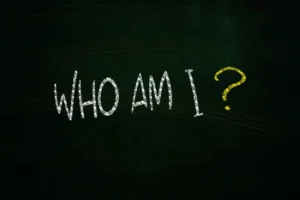 The reader may wonder whether I have tried this approach, and indeed I have … on several occasions. Unfortunately I was not successful in sustaining the ‘I’-thought. I did find the practice calming, even to the point of drowsiness. However, no degree of concentration on the first question and redirecting by the second seemed to keep my mind from wandering or dozing off. One problem for me was the propensity to mentally hear or visualize the individual words “who,” “am,” and “I”. I found this distracting me from the wordlessness I suspect is necessary, though such interference did sync up nicely with deep breathing (inspiring during the words and expiring in between). I also found the question “What am I?” intruding in; perhaps this is natural for the Western philosopher.
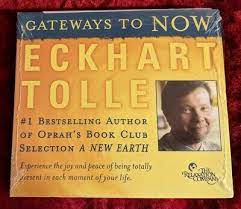 Eckhart Tolle’s three gateways to the Now, or Eknath Easwaran’s suggestion of a mantra (such as “Om” or “Lord Jesus Christ”) or the use of a sacred passage (I always liked the 23rd Psalm). Perhaps that is not a surprise since these methods also seek single-pointedness. My failure does not disprove the value of any of these techniques including Self-enquiry – I may just not be sufficiently primed or disposed for Eastern meditation, or I may simply need more practice or require guidance from an experienced practitioner.
 unrevealed thoughts and feelings, and deepest of all, the pure awareness and unadulterated consciousness that is immediately recognizable in a newborn, which I call the ‘primal self.’ I believe this is the Maharshi’s ‘ Awareness which alone remains- ‘that I am.’ It may take some effort for the reader to distill it out from the fully constructed self, but it is and has always has been there, and as the Maharshi tells us, it precedes existentially our recognition of the physical body and the turbulent mind.
 “Meditation consists in thinking that one’s self is Brahman, Existence-Consciousness-Bliss.” – The Maharshi restates perhaps the most fundamental principle of the Upanishads – “Tat tvam asi” – Atman. Our inner self or ‘soul’ is identical with the spiritual underpinning of reality or (capital S) ‘Soul.’ Both encompass being, consciousness, and complete happiness, blessing, bliss. The portal to this conjunction of souls is meditation, which for him is epitomized in his method of “Self-enquiry’ – the subject of the next post.


