
Building on this platform of natural ethics, a spirituality of unity, and the power of Tao/Te, Laozi comes to some astonishing conclusions. The first and most surprising regards human purpose: the absence of purpose is one’s purpose! That is to say that individual purpose originates in following the inherent ‘purpose’ emanating from Tao. To be clear; human purpose is the facilitation of the natural course of events in the world along the path of least resistance.  Laozi leaves no doubt; increased striving and movement outside the guardrails of natural processes is counterproductive to the purpose instantiated in the universe. In this sense Tao informs one of humanity’s great opposites, freedom and fate. We can choose freely whether to follow Tao with its sheen of determinism or not to follow the Tao and hazard the unanticipated consequences.3
Second Laozi is tells us that one gets closest to the Tao when one cultivates natural wisdom and follows the Tao. This is achieved through two modalities: (1) quietism or philosophical inaction based on the humble recognition that one’s ignorance of the intricacy and final direction of cosmic unfolding and (2) wu-wei or prudent action informed by an instinctual priority of yin over yang when intercession is necessary.
At last one may come to the highest excellence. For Laozi, Tao is logically prior to and above the world – in his words ‘subtle’ which appears to be interchangeable with the I Ching’s word, ‘sublime.’ By quietly contemplating and conforming to the Tao, one reaches apotheosis or enlightenment – the ‘subtle’. 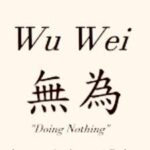 Laozi calls this human summit, the Sage, that is one who participates fully in ultimate reality as both the saint in his or her selflessness, sympathy, and humility, and the hero as the guarded wise actor in Nature who serves as a paradigm for others. This, I believe, is the second kind of change described in the I Ching – transformation.
Finally, the Sage also achieves immortality, not through striving to exist and prosper, but by endurance (‘persistence’ is the term in the I Ching) in new-found wisdom, tranquility, and concordance with the Way. Laozi therefore addresses the four fundamental pieces of the meaningful life I have proposed on this site– virtue, purpose, contentment, and participation in ultimate reality! Few other thinkers have been so comprehensive.
—————————————–
3Who can miss the analogy with Hinduism’s karma ? A practical example may be modern overforesting with the consequences of global warming and loss of habitat for valuable species.
—————————————–
Having trouble leaving a question or comment? E-mail me at gregoryciliberti@gmail.com
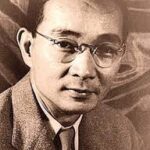 “The thought has been constantly on my mind to find a religion that is acceptable to a scientist.” – Lin Yutang, in his introduction to the Daodejing.1
 Tao, via its power or Te, also regulates the dynamic reversion (interchangeability) of the opposites thereby producing the eternal cycles of the universe, that instantiate the first kind of change in the I Ching – alternation. By this process and as that which turns all things from outward to inward, Te is the unifying force in the cosmos as well. In short Tao/Te informs the mathematical harmony of reality described by the I Ching. However it is worth pointing out that Tao is not God as person in either text.
 To know when you have enough is to be immune from disgrace,
 “It has been said that he who is a good preserver of his life
 Makes them grow, develops them,
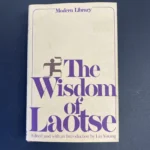 I thought it might be worthwhile to extract and rearrange portions of the Daodejing to demonstrate the depth of Laozi’s wisdom which challenged even Confucius. Be aware I will choose among the three translations in my possession the version I find most consistent with my particular understanding of Laozi’s message.
 The valley in virtue of the One is full;


