
SELF-ENQUIRY
We come at last to Bhagavan Sri Ramana’s method of meditation called Self-enquiry. As with most approaches to meditation offered by spiritual masters, his is utterly simple. One need only reflect unwaveringly on the question, “Who am I?” Interrupting thoughts are redirected by a second question, “To whom are do they arise?” bringing the mind back to the ‘I’. If successfully sustained, one arrives at single-pointedness on the ‘I’ and presumably with no additional effort the ‘I’-thought will vanish leaving an empty mind experienced as pure tranquility and oneness with the universe. There is no mention of a program of study or the need for a master-guide, and the Maharshi seems to hint that these may interfere with our success. Nonetheless, when reading the text, one has no doubt the Maharshi has achieved a state of enlightenment using his method.
 The reader may wonder whether I have tried this approach, and indeed I have … on several occasions. Unfortunately I was not successful in sustaining the ‘I’-thought. I did find the practice calming, even to the point of drowsiness. However, no degree of concentration on the first question and redirecting by the second seemed to keep my mind from wandering or dozing off. One problem for me was the propensity to mentally hear or visualize the individual words “who,” “am,” and “I”. I found this distracting me from the wordlessness I suspect is necessary, though such interference did sync up nicely with deep breathing (inspiring during the words and expiring in between). I also found the question “What am I?” intruding in; perhaps this is natural for the Western philosopher.
Ultimately I did not find Self-enquiry more effective than Buddha’s recommendation to try to fully empty the mind of all thought, Nichiren Shoshu’s chanting of “nam-myoho-renge-kyo” (which I tried in college), Zen Buddhism’s concentration on paradoxical questions (such as the sound of one hand clapping),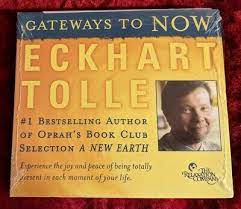 Eckhart Tolle’s three gateways to the Now, or Eknath Easwaran’s suggestion of a mantra (such as “Om” or “Lord Jesus Christ”) or the use of a sacred passage (I always liked the 23rd Psalm). Perhaps that is not a surprise since these methods also seek single-pointedness. My failure does not disprove the value of any of these techniques including Self-enquiry – I may just not be sufficiently primed or disposed for Eastern meditation, or I may simply need more practice or require guidance from an experienced practitioner.
Whatever the reason, I have experienced as much tranquility and connection with the cosmos from stargazing, close observation of nature and its wonders, concentrated philosophical study, and even mathematical exercises (e.g. finding patterns inherent in prime numbers).
In the meantime, I leave it to readers to try the Maharshi’s method for themselves and report back to us in the comment section.
(conclusion next post)


