
Layered on the unfathomable Tao, ultimate reality for Laozi involves a second mystical concept – the unity of everything in the universe. Superficially this unity manifests binaries suggesting a realm imbued with opposites.  However, beneath the surface, we see that opposites are reciprocally defining, thus, for example, we cannot understand beauty without ugliness, love without hate, or goodness without evil. In short, all presumed opposites are inseparable and complementary, and finally interchangeable – consider life and death.10 Stated somewhat differently, all opposites hinge on attributes which are in fact relative; only Tao is Absolute.11 Moreover Tao adjudicates the opposites; especially yin and yang; balancing the converse poles through a dynamic reversion that perpetually resolves all propensity to extremes.12 In this way, the opposites, regulated by Tao, instantiate the eternal cycles that pervade the unity of the cosmos.
Laozi tells us our differentiation of opposites is a kind of illusion founded limits on our knowledge. Since all manifest the Tao, no thing is greater than or entirely distinct from its obverse. Nevertheless he cautions that the search for greater knowledge of some imagined superior attribute or good (such as virtue or wealth) only works against the natural flow of existence. In the end, our striving for subjective preferences (including moral codes) arising from or developed through learning, rather than wisdom, results in disharmony.
Laozi offers the example of Heaven and Earth – important opposites neither of which is intrinsically benign or malignant – both being ultimately indifferent. The Tao, it turns out, is above benevolence and partiality. Amorally obeying the ‘Law’ (the Way) is the path to harmony and peace.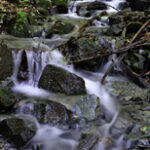 Endurance, not striving, is the means to continuation. He also uses the powerful metaphor of water: “its excellence is seen in its benefiting all and occupying without dissent the lowest place which none chooses.”13 Here is revealed another tenet of Laozi’s philosophy, the priority of yin over yang, the passive over the active.
In summary, Laozi’s monist ultimate reality is a unitary cosmos, eternally cycling between mutually defining opposites originating from and governed by the immanent, absolute, and inscrutable Tao within everything. We are left with much to think about!
———————————————
10 McGreal, Ian P. (editor) Great Thinkers of the Eastern World. HarperCollinsPublishers, New York, 1995. ISBN 0-06-270085-5, page 14.
11Magill, Frank N. and McGreal, Ian P. (editors), Masterpieces of World Philosophy in Summary Form. Harper & Row, Publishers, New York, 1961. Page 113.
12 McGreal, Ian P. (editor) Great Thinkers of the Eastern World. HarperCollinsPublishers, New York, 1995. ISBN 0-06-270085-5, page 14.
13Beck, L. Adams, The Story of Oriental Philosophy. The New Home Library, New York, 1942. Page 347.
—————————————–
Having trouble leaving a question or comment? E-mail me at gregoryciliberti@gmail.com


