
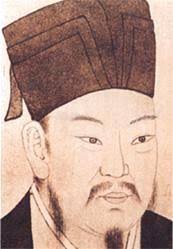
 “When the reality of the non-ultimate [non existent] and the essence of yin, yang, and the Five Agents come into mysterious union, integration ensues. Ch’ien (heaven) constitutes the male element and K’un (earth) constitutes the female element. The interaction of these two material forces engenders and transforms the myriad things. The myriad things produce and reproduce, resulting in unending transformation.” – Zhou Dunyi1
Having reviewed the historical context of Chinese philosophy that led to the blending of Confucianism, Taoism, and Buddhism into the enduring tradition of Neo-Confucianism, our next steps are to examine specific thinkers who contributed to its metaphysical foundations starting with Zhou Dunyi (Chou Tun-i), the “father” of Song dynasty Neo-Confuciansim. He was born at Yangdao in Daozhou (modern state of Huan) in 1017 and lived until 1073. He was both a magistrate and a professor, known for his love of all life. His major works were Taijtu or An Explanation of the Diagram of the Great Ultimate and Tongstu or Penetrating the Book of Changes.2
Zhou starts by discarding one feature of earlier Taoist thought, the negative side of Tao as non-being, perhaps as it approximates too closely Buddhist thought which the Neo-Confucianists hoped to replace. Instead he speaks of the T’ai-chi or the Great Ultimate as the source of all things starting with the forces of yin and yang. The primeval Great Ultimate is active hence the source of yang, but as it exhausts itself becomes tranquil generating yin. The interaction of these two in turn leads to the Five Elements (also called the Five Phases) – water, fire, wood, metal, and earth – which are not things as such, but the principles of things. Their interactions proceed to create the rest of reality.3 We have perhaps our first complete Chinese cosmology which explains how the many are ultimately One and the means by which the One is differentiated in the many.4
Zhou introduces us to the Diagram of the Great Ultimate, a symbolic representation of these propositions hauntingly similar to the Kabbalah of Jewish mysticism.
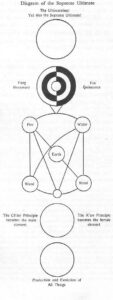
At the top is the mystic phrase: “The Ultimateless and yet the Great Ultimate” above an empty circle. Just below is the black and white banded circle, representing both the Great Ultimate and its progeny yang or movement and yin or quiescence. Beneath this is the web of interconnectivity of the Five Elements which are above another circle with the qian (ch’ien) or the male principle on the left and the kun (k’un) or yin or the female principle on the right. The lowest circle symbolizes the production and transformation of the myriad things engendered by the circle above.5
(continued next post)
—————————————–
1Koller, John M., Oriental Philosophies. Charles Scribner’s Sons, New York, 1970. ISBN 684-13668-6, page 255.
2McGreal, Ian P. (editor) Great Thinkers of the Eastern World. HarperCollinsPublishers, New York, 1995. ISBN 06-270085-5, page 104.
3Koller, John M., Oriental Philosophies. Charles Scribner’s Sons, New York, 1970. ISBN 684-13668-6, page 254.
4Edwards, Paul (editor), The Encyclopedia of Philosophy. Macmillan Publishing Co., Inc. & The Free Press, 1972. Volume 2, page 92.
5McGreal, Ian P. (editor) Great Thinkers of the Eastern World. HarperCollinsPublishers, New York, 1995. ISBN 06-270085-5, page 105.
—————————————–
Having trouble leaving a question or comment? E-mail me at gregoryciliberti@gmail.com
 We pick up now with our overview of the Chinese tradition of Neo-Confucianism. After the fall of the Han dynasty in the 3rd century C.E., Taoism and Buddhism became dominant while Confucianism waned. This dominance lasted until the end of the Tang dynasty which declined after the An Lushan Rebellion (755-763) and finally fell in 907 leaving a fragmented and chaotic China. Meanwhile Han Yu (768-824), a government official, had written an influential text, Essentials of the Moral Way (or An Inquiry on the Tao) in 805, in which he promoted a return to Confucianism, although he was exiled thereafter.1
 “Nature is nothing else than Law.” – Chu Hsi1
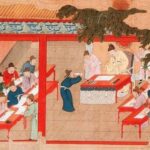 We will start with a review of the history of the origination and progression of Neo-Confucian thought. We then take up critical metaphysical thinkers in rough chronological order, starting with Zhou Dunyi and Zhang Zai and their concepts of the Great Ultimate and Neo-Confucian cosmology followed by the Cheng brothers with their emphasis on human nature as proxy of the principle of the world. Thereafter we will meet Zhu Xi who professes a dualist metaphysics of principle and material force followed by Wang Yangming who focuses on goodness and moral action. Last we will look briefly at the contributions of a few less consequential, but still notable thinkers and end with a summary and synthesis.
 One sect, known as Tien-shih Tao or ‘Taoism of the Celestial Master,’ began with Chang Tao-ling, a prominent early Taoist, who migrated west and claimed to have brought all of the demons and spirits under his power enabling him to protect his followers against all evil. This power was transmitted to his line of descendants who by 1016 dwelled on the Dragon and Tiger mountain (Lung-hu shan) in Kiangsi creating a kind of Taoist ‘papacy’ that lasted into the 20th century. Among its rituals of repentance included some of ecstatic and orgiastic character.9
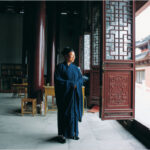 My source states that, at least as of its 1988 publication, Taoism as a religion is still alive in China and Taiwan and has been acknowledged by the government of mainland China since 1957. It remains for most Chinese the worship of Nature and the desire for harmony with it. Taoist tradition supports the Socialist construction of the state and the goal of world peace and religious freedom.12
 We travel back to Chinese prehistory where beliefs in that region were most likely similar to those of other primitive societies – a mix of animistic fear and worship, reverence for fertility and reproduction, adoration of the heavens, and deification of ancient leaders.2 Taoism offered a more sophisticated foundation and as it spread, the ineffable Tao, was imagined to have emanated itself into being as the Supreme God, Yüan-shih t’ien-tsun or the ‘Celestial Venerable of the Mysterious Origin.’ Official worship began during the first Han Dynasty (206 B.C.E. – 8 C.E).3
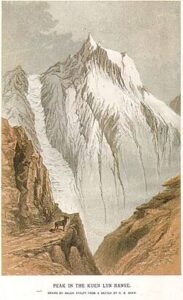 Not surprisingly the belief in immortality in an abode of paradise took hold in the developing Taoist religion. The search for the deathless utopia ensued. Some thought it was blessed islands off the coast of Shangtung, and the first Ch‘ in emperor sent out ships to find them. Additional locations of paradise were postulated including the summit of K‘un-lun mountain in West China, where His-wang-mu or the ‘Western Royal Mother’ (the god of medicine) resided.7
  The message is clear, into this matrix we are born and so we too must be careful that our actions do not unnecessarily disturb it. Nonetheless, Guo Xiang does not advocate strict determinism, rather something more like the appearance of novel effects explained by complexity and chaos theory. Recognition of our co-dependency with the world is our ultimate ticket to freedom – “Let everything be what it is, and then you have peace.”6
 “There has never been a person who has roamed over the transcendental world to the utmost and yet was not silently in harmony with the mundane world, nor has there been anyone who was silently in harmony with the mundane world and yet did not roam over the transcendental world. Therefore the sage always roams in the transcendental world in order to enlarge the mundane world. By having no deliberate mind of his own, he is in accord with all things.”10
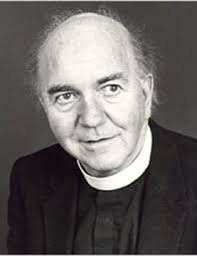 “…if God is being and not a being, then one can no more say that God is than that being is. God (or being) is not but rather lets be. But to let be is more primordial than to be, so that, as has already been said, being ‘is’ more ‘beingful’ than any possible being which it lets be…” – John Macquarrie, Principles of Christian Theology1
 Guo Xiang is denying substantialistic thinking with regard to Tao which for him is more akin to a field of interrelatedness. Things arise spontaneously by contextual processes of interaction and transformation. Guo Xiang also rejects the classic deterministic trap of eternal reversion:
 The sixth chapter, Endeavor and Destiny, contrasts the ways of humanity or ‘endeavor’ with the course of nature or ‘destiny’ (ming). Liezi tells us that while people think they accomplish things by their own efforts, in truth, they are destined to achieve wherever they succeed. However Liezi is not advocating strict fatalism regarding our actions, only reiterating the desirability of following the path of natural spontaneity rather than of premeditated action. He uses the analogy of the swimmer following the current rather than fighting against it.5
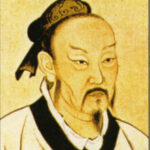 Finally we back up to the seventh chapter, Yang Zhu, which offers a different nuance of spontaneity. Yang Zhu was often attacked by the Confucians for his reported selfishness when he said he would not be willing to sacrifice one hair from his shin to save an empire. Liezi parlays this into the choice of a hedonistic self-indulgence and pursuit of pleasure as another spontaneous and natural choice for the Taoist. Like the Epicureans, however, he warns us of the ills of over-indulgence. In short, the life of disciplined pleasure and enjoyment free of conventional restraints can be seen as an alternative path of genuine spontaneity.7
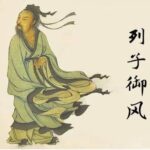 “The great Lieh Tzu could ride the wind, going to the edges without concern, but returning after fifteen days. In search of good fortune he knew no boundaries. Although he never had to bother with walking, nevertheless he needed some way of getting around. If instead he had risen through the naturalness of Heaven and Earth, travelled on the six elemental forces and voyaged into the unknown and unlimited, he would have to depend on nothing! The perfect man has no self; the spiritual man has no merit; the holy man has no fame.”– The Book of Chuang Tzu, Chapter 1 (earliest known mention of Liezi).1
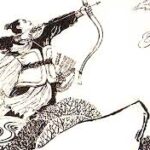 The second chapter, Yellow Emperor, explains the Taoist theory of ideal action done selflessly and purposelessly in harmony with nature. Using the example of himself as a skilled archer who nonetheless sweats and trembles when asked by his master to shoot while perched over a precipice, Liezi is chastised for his self-conscious fear that produces the very danger such internalizing can evoke. Wu wei then is action in harmony with the Tao free of self-awareness – ‘the action of no-action.”3
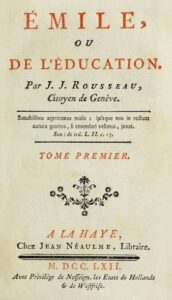 “Let us set down as an incontestable maxim that the first movements of nature are always right.”– Jean-Jaques Rousseau, Émile.
 There are other areas to critique. First, language may be flawed, but still it functions better than any other means available to us to advance human understanding not only of science, but of the Tao itself. Second, the speculation of metaphysical immortality based on tying oneself to Tao seems at best wishful thinking and at worst self-defeating, a sleight of hand that removes one’s eventual death as the focal point for a productive and meaningful life. Last, Zhuangzi does not present Tao as ‘God’, but any impersonal ultimate ‘being’ ends up religiously unappealing as the Deists discovered two millenia later.


