
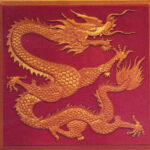
 Continuing with the ‘sublime’ in the I Ching, according to commentaries (perhaps by Confucius or his followers) sublime success applies to the two basic kinds of people: the leader and the follower. The great leader (including the sage) is represented by Ch’ien or the dragon. Sublime success here depends on self-improvement, humility, truthfulness, accessibility, perseverance, and efforts harmonized with nature wherein “the whole cosmos [is] brought into unison.”20 Alternatively, the follower is represented by K’un or earth where sublime success requires breadth of character, relation to the world, fulfillment of duty, furthering of all creatures, modesty, inner beauty, self-control, influence through reason, and constancy. These states of Ch’ien and K’un or leader and follower can be transposable in each individual and thus paradoxically, “everlasting steadfastness in greatness.”21 However it is worth added emphasis: all sublime success depends on conformity of personal behavior with the laws of nature.
One last concept we extract from Wilhelm is the value of the I Ching as a focus of meditation. Consider the following:
“Therefore it is the order of the Changes that the superior man devotes himself to and he attains tranquility by. It is the judgments on the individual lines that the superior man takes pleasure in and the he ponders on.”22
Or
“The Book of Changes contains the measure of heaven and earth; therefore it enables us to comprehend the tao of heaven and earth and its order…Looking upward, we contemplate with its help the signs in the heavens; looking down, we examine the lines of the earth. Thus we come to know the circumstances of the dark and the light. Going back to the beginnings of things and pursuing them to the end, we come to know the lessons of birth and death…Since in this way man comes to resemble heaven and earth, he is not in conflict with them. His wisdom enables all things, and his tao brings order into the world…”23
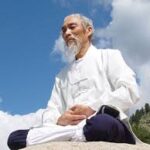 Wilhelm names five hexagrams on which meditation offers perhaps the greatest value for supreme success: ‘Inner truth” (#61), ‘Limitation” (#60 – self-communion and silence), ‘Preponderance of the Great’ (# 28 – caution), ‘Deliverance’ (#40 – magnanimity and forbearance), and ‘Modesty’ (# 15). The message here is clear, the I Ching is a guide for speech and action and a source of foresight and prudence – in short, a book of wisdom.
(final continuation next post)
———————————————
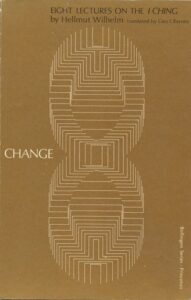
20Wilhelm, Hellmut, Change – Eight Lectures on the I Ching. Princeton University Press, Princeton New Jersey, 1973. ISBN 0-691-01787-5, page 57.
21Ibid., page 65.
22Ibid., page 68.
23Ibid., page 69.
—————————————–
Having trouble leaving a question or comment? E-mail me at gregoryciliberti@gmail.com
 The I Ching teaches there are two kinds of change: alternation and transformation. This duality is explained by a second kind of polarity – motion and rest – each of which manifests in the two forces: yang or ‘firm’(the Creative) represented by the unbroken line, and yin or ‘yielding’ (the Receptive) represented by the broken line.12
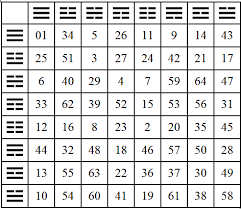
 Wilhelm next offers a somewhat detailed discussion of specific hexagrams and their attendant commentary that goes beyond the scope of this site. However some concepts he discusses expand our understanding of ultimate reality in the I Ching. First it projects a mathematical order on the universe within which the hexagrams inform a kind of mystical periodic table. Second, cosmic order in the I Ching is analogous to music as exhibited by the harmony of the hexagrams and the unfolding of symphonic-like themes and variations which humans appreciate when they seek the perfection of these expressions within the natural world.16
 But the constancy of change – “change that is unchangeable”6 – affords a kind of security in the assurance that events are unfolding in the right direction. Wilhelm uses the example of social relations: consider how the son’s deference to his father is reiterated later in his own son’s respect for him. Natural change then is not chaotic, but analogous to the human virtue of reliability. And one’s understanding of the change or tao of heaven and earth allows one to resemble them and avoid conflict with them.
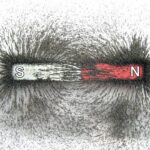 A second duality is that of polarity, meaning two antithetical points which set limits on cycles of change, such as yin and yang or above and below. Such polarities imply not rigidity nor even a pole round which cyclic movements turn, but something akin to a “magnetic field” or inter-relationship which evokes change. The two most important of these are Ch’ien (the Creative, heaven, energy, bright, yang) and K’un (the Receptive, earth, form, dark, yin).9 Wilhelm quotes the Great Commentary twice:
 “…The Book of Changes represented the gate to the whole man and to the whole world.” – Hellmut Wilhelm1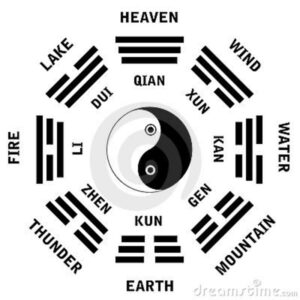
 “These peoples are superior to all other Asiatics in antiquity, art, intellect, wisdom, policy, and in their taste for philosophy…” – Diderot1
 Meanwhile, Laozi (previously Lao Tzu) was primarily a spiritual thinker, who blended a natural metaphysics with mystical experience to inform a kind of wisdom ethics centered on the value of quietism and wu-wei or effortless action. His only written work – and even that of apocryphal origin – is the very short Daodejing (historically called the Tao Te Ching). His greatest follower, Zhuangzi (previously Chuang Tzu), developed Laozi’s obscure teachings into poetic lessons more accessible to the ordinary person. Taoism had a mixed history, sometimes regional and practiced secretly when out of favor and other times state-sponsored by rulers who suppressed Confucianism and Buddhism. With the advent of the NeoConfucian amalgam, many of its metaphysical principles were accepted throughout China.
 “Taoism is a religion as well as a philosophy.” – Werner Eichorn1
 After this brief introduction, we will peruse the complex history surrounding Taoism in the setting of Chinese political and intellectual history. Next we will examine the I-Ching which offers an early model of ultimate reality that influenced later thinkers. Then we arrive at the core of this section; discussions on the Daodejing (known historically as the Tao Te Ching) by Laozi and the work of his follower Zhuangzi. We will add more depth with brief looks at Liezi, the third great ancient Taoist, and Guo Xiang, a later thinker. As we move forward in time we come to deification of the Tao and Huainanzi’s cosmology of the unfolding of the Tao. Thereafter we will examine briefly the integrated Chinese philosophy or religion known as NeoConfucianism which appeared in the 8th century and lasted until modern times. Finally we will look at a few contemporary presentations of Taoism for modern living. We close, as always, with a summary and synthesis.
 Harlow Shapley, we have seen, considers ultimate reality as five fundamental constituents of the universe – space, time, matter, energy, and cosmic evolution. He assures us that this latter term can explain the appearance of ‘protoplasmic life’ via a long chain from ‘mystical hydrogen’ without the need for supernatural forces or divine miracles. It is true that through cosmic evolution humans appear with an advanced brain that permits us to seek distant goals beyond individual fate, but social insects duplicate some of our mores, and life elsewhere may be more ‘perfect’ than Homo sapiens.


