
INTERDEPENDENCY/PROCESS
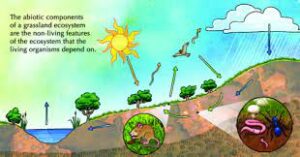 Whitehead asserts science and experience inform us that each event in the universe is a factor in every other event such that “all things ultimately inhere in each other”12 – there are no isolated events. The real world then is an interdependency of interrelated parts more descriptive of an organism than a machine. Moreover all occasions develop within the spatio-temporal continuum and are qualified in past, present, and future. New actual entities arise from prior occasions and eventually themselves perish, but not before being objectified by still later occasions.
Each “actual entity is that which it can become”13 and thus ‘being’ is constituted as ‘becoming’ or in other words is a ‘process.’ Process leads to novelty and the emergency of novelty which may inhibit or delay creativity or may lead to a creative advance. The inhibition or delay in creativity represents an evil, but the final creative advance that follows is better by virtue of that evil. This dynamic actualization, interdependence, process, and creativity concord with the primary data of our immediate experience of the universe.
ORGANISM
Whitehead’s philosophy of organism springs from his analysis of Bergson’s default to reality as partly mechanistic and partly elan vital or ‘vitalism.’ Whitehead feels this is an unsatisfactory compromise whereby “mechanism is partially mitigated within living bodies” while in fact, “the gap between living and dead matter is vague and problematical to bear the weight of such an arbitrary assumption, which involves an essential dualism somewhere.”14
 Instead he suggests all “concrete enduring entities are organisms, so that the plan of the whole influences the very characters of the various subordinate organisms which enter into it.” Consequently “this doctrine involves the abandonment of traditional scientific materialism, and the substitution of an alternative doctrine of organism.”15 He justifies this further by pointing out how modern science has replaced the primacy of ‘mass’ with that of ‘energy.’ Energy, it turns out, is fundamental, but energy “is merely the name for the quantitative aspect of a structure of happenings: in short, it depends on the functioning of organism.”16
Whitehead’s goes on: “The notion of ‘organism’ is combined with that of ‘process’ in a twofold manner. The community of actual things is an organism, but it is not a static organism. It is an incompletion of process of production. Thus the expansion of the universe in respect to actual things is the first meaning of ‘process’; and the universe in any stage of expansion is the first meaning of ‘organism.’ In this sense, an organism is a nexus.”17 He concludes: “The Cartesian subjectivism in its application to physical science became Newton’s assumptions of individually existent physical bodies, with merely external relationships. We diverge from Descartes by holding that what he has described as primary attributes of physical bodies are really the forms of internal relationships between actual occasions, and within actual occasions. Such a change of thought is the shift from materialism to organism, as the basic idea of science.”18
—————————————————————–
12Magill, Frank N. and McGreal, Ian P. (editors), Masterpieces of World Philosophy in Summary Form. Harper & Row, Publishers, New York, 1961. Page 924.
13Ibid., page 925.
14Whitehead, Alfred North, Science and the Modern World. The Free Press, New York, 1969. Page 79.
15Ibid., pages 79-80.
16Ibid., page 102.
17Alfred North Whitehead, Process and Reality. The Free Press, New York, 1978. ISBN 0-02-934570-7, pages 214-215.
18Ibid., page 309.


Lots of stuff around Whitehead and Russell these days. Shoulders and giants, I guess.
Paul,
Then you know more than I do.
Is their book ‘Principia Mathematica’ being mentioned more? Where and by whom?
Thanks,
Greg