
 “This, too, is Nature’s way.” – Zhuangzi
In our investigation of the Taoist concept of ultimate reality and its access points, we have already reviewed the I Ching and the Daodejing. Both use the word Tao for that which underlies the fundamental processes and order displayed in Nature including the constant of change. Tao is likewise for both that which generates and regulates the universe and its supreme triangle – Cosmos, Nature, and humankind – through Te (power or virtue). Optimal human participation in Tao depends on four factors: (1) key virtues such as humility and selflessness, (2) conduct informed by philosophical inaction or limited prudent action (wu-wei), (3) synchronization with Nature and the Way, and (4) an internal turning and emptiness that makes room for the One and All. Within this existential edifice, one can locate the summum bonum of Taoism – the ‘sublime’ or the ‘subtle’ – and achieve the status of the Sage and an eternal existence akin to immortality through union with the Tao.
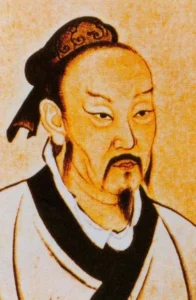
Our next great thinker in this tradition is Zhuangzi (Chuang Chou, Chuang Tzu, etc.) who, like Laozi, may be legendary. His dates are generally given as 370 BCE to about 285 B.C.E. According to Sima Qian, he lived in the Henan (Honan) province of China and was a minor official who resigned from government service and refused higher office thereafter. Some scholars consider him one of many eccentric recluses who challenged Confucian teaching during the Warring States Period.1
The text itself, known as the Chuang Tzu, consists of 33 chapters of which only the first seven, the “inner chapters”, are thought to be by Zhuangzi’s own hand. The “outer chapters” (8-22) and the “miscellaneous chapters” (23-33) were most likely composed by later followers. Interestingly this expanded number of chapters is a reduction from the earlier 53 chapters through editing by Kuo Hsiang (died 312 C.E.). For the purpose of this blog, we will treat all of the extant text as original to Zhuangzi.
 While less aphoristic and more extended than the Daodejing, the Chuang Tzu presents a mix of parables, poetry, imaginary dialogues, and metaphorical stories rather than a methodologic system. Some experts see Zhuangzi’s work as an exploration and interpretation of the Daodejing, while others feel it is more original. Whatever the case, the text features sufficient epistemology, logic, analogy, and dialectic to delineate Zhuangzi’s philosophical thinking.
Next time we will pick up with his major points.
—————————————–
1Magill, Frank N. and McGreal, Ian P. (editors), Masterpieces of World Philosophy. HarperCollinsPublishers, 1990. ISBN 0-06-270051-0, page 97.
—————————————–
Having trouble leaving a question or comment? E-mail me at gregoryciliberti@gmail.com


