
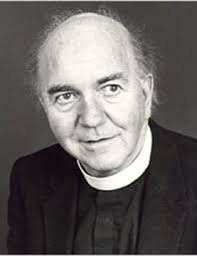
 “…if God is being and not a being, then one can no more say that God is than that being is. God (or being) is not but rather lets be. But to let be is more primordial than to be, so that, as has already been said, being ‘is’ more ‘beingful’ than any possible being which it lets be…” – John Macquarrie, Principles of Christian Theology1
Having completed our examination of ultimate reality and human connection to it as presented by the three great classical Taoists – Laozi, Zhuangzi, and Liezi – we jump five centuries to the later Han dynasty where we encounter the great medieval Taoist, Guo Xiang (Kuo Hsiang; died 312 C.E.). In conjunction with his senior contemporary, Xiang Xiu (Hsiang Hsiu), he edited the Chuang Tzu, cutting the number of chapters from fifty-two to thirty-three while adding an authoritative commentary on Zhuangzi’s thinking. For our purposes, I will attribute the text to Guo Xiang, though in fact it is the blended effort of these two third century scholars. It is also important to note that Guo Xiang was influenced by other currents of the time – particularly the Seven Sages of the Bamboo Grove who practiced qing tan or the art of pure philosophical conversation and the Xuan Xue or ‘Mysterious Teachings.’2
The first clarification Guo Xiang makes is definitional; the Tao is not ‘the first cause’ or ‘God’ but ‘spontaneous order’ or perhaps ‘spontaneous processes.’ Consider the following astonishing quote:
“Tao is nothing. How can it cause the gods to be divine and the world to be produced? It does not cause the gods to be divine, but they are divine themselves. So Tao causes them to be divine by not causing them. Tao does not produce the world, but the world produces itself. So Tao produces it by not producing it…Tao is everywhere, but everywhere it is nothing.”3
 Guo Xiang is denying substantialistic thinking with regard to Tao which for him is more akin to a field of interrelatedness. Things arise spontaneously by contextual processes of interaction and transformation. Guo Xiang also rejects the classic deterministic trap of eternal reversion:
“We may claim that we know the cause of certain things, but there is still the question: what is the cause of these causes? If we continue to ask this question again and again, we have to stop at something that is spontaneously self-producing and is what it is. We cannot ask about the cause of this something. We can only say that it is.”4
This causeless ‘is-ness’ is the very nature of Tao. In the West, we might think of the phrase, ‘necessary existence,’ but Guo Xiang coins the seemingly more descriptive, if not fully comprehensible phrase – ‘self-so-ing’ (ziran) which can perhaps be understood alternatively as ‘being-so’ or ‘the way a thing is by itself.’ While this sounds much like the Existentialist term, ‘being-in-itself,’ Guo Xiang suggests something more, i.e. the capacity for self-transformating (duhua), hence not mere static being, but an intrinsically dynamic process of being.5
(continued next post)
—————————————–
1Underlining added by me to emphasize Macquarrie’s originally italicized words.
2McGreal, Ian P. (editor) Great Thinkers of the Eastern World. HarperCollinsPublishers, New York, 1995. ISBN 06-270085-5, page 80.
3Ibid., pages 80-81.
4Ibid., page 81.
5Ibid.
—————————————–
Having trouble leaving a question or comment? E-mail me at gregoryciliberti@gmail.com


