
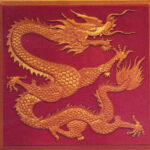
 Continuing with the ‘sublime’ in the I Ching, according to commentaries (perhaps by Confucius or his followers) sublime success applies to the two basic kinds of people: the leader and the follower. The great leader (including the sage) is represented by Ch’ien or the dragon. Sublime success here depends on self-improvement, humility, truthfulness, accessibility, perseverance, and efforts harmonized with nature wherein “the whole cosmos [is] brought into unison.”20 Alternatively, the follower is represented by K’un or earth where sublime success requires breadth of character, relation to the world, fulfillment of duty, furthering of all creatures, modesty, inner beauty, self-control, influence through reason, and constancy. These states of Ch’ien and K’un or leader and follower can be transposable in each individual and thus paradoxically, “everlasting steadfastness in greatness.”21 However it is worth added emphasis: all sublime success depends on conformity of personal behavior with the laws of nature.
One last concept we extract from Wilhelm is the value of the I Ching as a focus of meditation. Consider the following:
“Therefore it is the order of the Changes that the superior man devotes himself to and he attains tranquility by. It is the judgments on the individual lines that the superior man takes pleasure in and the he ponders on.”22
Or
“The Book of Changes contains the measure of heaven and earth; therefore it enables us to comprehend the tao of heaven and earth and its order…Looking upward, we contemplate with its help the signs in the heavens; looking down, we examine the lines of the earth. Thus we come to know the circumstances of the dark and the light. Going back to the beginnings of things and pursuing them to the end, we come to know the lessons of birth and death…Since in this way man comes to resemble heaven and earth, he is not in conflict with them. His wisdom enables all things, and his tao brings order into the world…”23
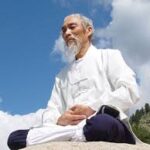 Wilhelm names five hexagrams on which meditation offers perhaps the greatest value for supreme success: ‘Inner truth” (#61), ‘Limitation” (#60 – self-communion and silence), ‘Preponderance of the Great’ (# 28 – caution), ‘Deliverance’ (#40 – magnanimity and forbearance), and ‘Modesty’ (# 15). The message here is clear, the I Ching is a guide for speech and action and a source of foresight and prudence – in short, a book of wisdom.
(final continuation next post)
———————————————
20Wilhelm, Hellmut, Change – Eight Lectures on the I Ching. Princeton University Press, Princeton New Jersey, 1973. ISBN 0-691-01787-5, page 57.
21Ibid., page 65.
22Ibid., page 68.
23Ibid., page 69.
—————————————–
Having trouble leaving a question or comment? E-mail me at gregoryciliberti@gmail.com


