
“God always is, nor has He been and is not, nor is but has not been, but as He never will not be; so He never was not.” – Saint Augustine, De Trinitate (400-416).
Perhaps we should frame this next large section with a review of our work so far. First we have determined that philosophy as a guide to the meaningful life requires at least partial answers to two major questions: “What is the nature of reality?” and “How should I conduct myself in the world?” Second, for this site, we have determined that the highest good (summum bonum) for our species is a combination of happiness (or Eudaimonia) and meaning. Third, the vast human record reveals there are four interlocking factors in achieving the summum bonum: (1) Virtue, (2) Purpose, (3) Contentment, and (4) Participation in Ultimate Reality. We are currently working through the last of these and have already examined the scientific and philosophical perspectives in some detail.

We found the scientific perspective distilled down to the antipodes of the very small – that is what makes up the substances of the universe – and the incomprehensibly large – that is, the cosmos as a whole including its structural, dynamic, and transcendental features. Human participation occurs through not only the study of physical reality, but also a deep awe and near mystical understanding of existence – exemplified by Neil deGrasse Tyson’s mind-altering cosmic perspective: the reflexivity of in-ness of the universe and of ourselves, the wisdom of humility and caring, and the universe as stimulus towards spirituality.
The near-consensus philosophical perspective of ultimate reality begins with accepting the existence of just “this” world – Nature and the Cosmos – but in binary form as material and immaterial, and characterized by temporal continuance and timeless concepts blended with eternal change and self-organizing evolution, all pervaded by reason, goodness, and a divine essence. Human connection occurs through harmonizing oneself with Nature and aligning oneself with the Logos of the universe especially via reason, creativity, and unveiling the nature of things. 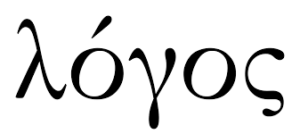 Such connection is sustained by a devotion to peace in society, the reciprocation of virtue and caring, and tranquil contemplation of the true nature of existence.
This brings us to the theological perspective on ultimate reality and human participation. Here I would like to clarify that we will not be dealing with religion per se, rather the teachings of the great spiritual thinkers (sometimes called the ‘church fathers’ or ‘church doctors’ or even ‘Masters’) who defined or elucidated the doctrine underpinning a religion. Some of these individuals appear more like philosophers (for example Laozi, Buddha, or Pseudo-Dionysius the Areopagite) while others are actual clerics (such as St. Augustine, Maimonides, or Paul Tillich). What they all have in common is that their thinking is foundational to a religion or comes out of religious scholarship.
(continued next post)
—————————————–
Having trouble leaving a question or comment? E-mail me at gregoryciliberti@gmail.com


