
 “Immortality is what nature possesses without effort and without anybody’s assistance, and immortality is what the mortals must therefore try to achieve if they want to live up to the world into which they were born, to live up to the things which surround them and to whose company they are admitted for a short while.” – Hannah Arendt, Between Past and Future.
In the last four posts we saw hat Zhuangzi understands Tao as absolute Truth, the fundamental principle of the universe, the origin of all being, the unending cycle of Nature, and the highest ideal. We also learned that for him participation in Tao entails discovering our hsing or true nature as spiritual beings through meditation, jettisoning abstract ideas, and non-interference in the course of things culminating in total freedom and salvation. Today I wish to fold in Zhuangzi’s thoughts on death and immortality.
We start this subject with his most basic belief: death is a natural part of life – just one of its infinite transformations.1 The perfectly adjusted individual remains balanced despite the inevitability of death as illustrated by the famous story of his celebration of his wife’s death when he tells his friend Hui Tzu:
“In the midst of the jumble of wonder and mystery a change took place and she had a spirit. Another change and she had a body. Another change and she was born. Now there’s another change and she’s dead. It’s just like the progression of the four seasons…”2
In another such story, he imagines the words of a disciple of Laozi regarding the Master’s death:
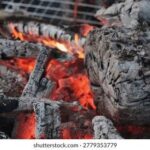 “When the Master came, it was because he was due to be born. When he died, it was entirely natural. If you are prepared for this and flow with it, then sorrow and joy cannot touch you…We can point to the wood that has been burned, but when the fire has passed on, we cannot know where it has gone.”3
Zhuangzi is reminding us that it is useless to set oneself against what is natural or inevitable. Rather one must adopt a different perspective, that is, death is simply another natural transformation.4 Fear of death and grieving for the dead assumes a knowledge of death which we do not have.5 On the other hand, the enlightened individual understands that one lives as long as one’s essence, the Tao, lives and it is eternal.6
Zhuangzi explains the mystical route to immortality: the True Man by ‘fasting” the mind and “contemplating on emptiness” achieves union with the Tao and taps into the mysterious power of Nature…the True Man is ethereal.7 In other words, alignment of oneself with the perfect rhythm of the Way results in transcendence of life and death.
Next time we conclude this section with my comments on Zhuangzi’s philosophy.
—————————————–
1McGreal, Ian P. (editor) Great Thinkers of the Eastern World. HarperCollinsPublishers, New York, 1995. ISBN 06-270085-5, page 21.
2Ibid., page 24.
3Palmer, Martin (translator), The Book of Chuang Tzu. Penguin Books, New York, 2006, ISBN-13; 978-0-140-45537-3, pages 24.
4McGreal, Ian P. (editor) Great Thinkers of the Eastern World. HarperCollinsPublishers, New York, 1995. ISBN 06-270085-5, pages24-25.
5Magill, Frank N. and McGreal, Ian P. (editors), Masterpieces of World Philosophy. HarperCollinsPublishers, 1990. ISBN 0-06-270051-0, page 99.
6Ibid., page 97.
7Ibid., page 99.
—————————————–
Having trouble leaving a question or comment? E-mail me at gregoryciliberti@gmail.com


