
CONCLUSIONS
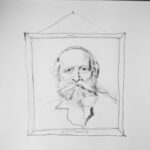 After examining Martin Buber’s three main philosophical texts, I and Thou, Eclipse of God, and Good and Evil, let’s now extract his key ideas for integration into the Jewish perspective on ultimate reality and for our more general use. Buber’s principal assertions include:
- Reality includes three key metaphysical elements: truth, the eternal “Thou”, and good and evil.
- Both truth and self-hood, for humans, are found within two kinds of relations – the “I-It” and the “I-Thou” – each of which is self-verifying.
- The “I-Thou” relation occurs within concrete reality through action.
- Every person in society is in a constant and inescapable flux between status as an “It” and as a “Thou” that is, being treated as an object (or means) or as a subject (or end) by others.
- Only the eternal “Thou” or God is never an “It” or an object.
- Any attempt to ‘know’ God though objectification fails as this results in an eclipse of God making Him unknowable.
- Through the “I-Thou” relation of reciprocal love with God, we co-create cosmic apotheosis and participate in God’s ‘becoming’ thus transporting us to the summit of human meaning and happiness.
- The pathway to relation with the eternal “Thou” leads through ethics to divine presence and is finally attained by meditation on God and the divine law.
I will integrate these with the earlier segments of this section on Judaism next time, but for now, the reader may ask, “What is the philosopher’s takeaway?” Well, first Buber tells us that epistemology applies with respect to the universe and reality, that is, some concepts or understandings of the World are true while others are not, and thus hard skepticism is specious. I refer the reader to the section, Certainty, on this site as a starting point for the disentangling of truth from fallacy. Second, our particular being is shaped by dint of relation to the World and to others. Therefore the existential outlook corresponds best with our lived experience.
 Third, God is not demonstrable by analysis of the cosmos or philosophical proof; direct contact is the only option for verification. Likewise I determined in the section, God, on this site that analytical approaches and logical arguments fail to prove there is a deity, while subjective warrants for God’s existence (including mystical experience) are judged more convincing – at least by those so affected. Finally, Buber’s thoughts comport with my ongoing thesis that alignment19 with ultimate reality, the universe, or Nature and ethics based on the highest degree of confidence20 are the means to a meaningful life. This guidance, it seems to me, applies to proponents of other theologies as well as the scientist and the philosopher.
——————————————————-
19Buber’s word is ‘relation’, but I note he emphasizes such relation must manifest as action in the World.
20From my standpoint, virtue is always striving to be an agent of good while factoring in pragmatic considerations.


