
CREATIVITY
For Whitehead, creativity is the universal of universals, the ultimate metaphysical principle which underlies all things without exception, including God.19 His description of the categories, interdependency, nexūs, process, and the divine formulate the matrix which establishes the defining feature of reality, its dynamism or creativity.
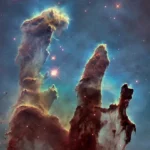 On the one hand there is a physical component of creation. At this level God is the principle actor, initiating a continuous process of potentiality becoming actuality, wherein elements are synthesized into new unities or “concrescences”. On the other hand, within the universal organism (and guided by divine wisdom), nexūs undergo process leading to novelty. Whitehead calls the emergence of the new the “creative advance.”
However the creative advance is more than the novel; it includes the objectification and harmonization of feelings. While intellect and consciousness arise in higher forms of concrescence, feelings are more fundamental and pretheoretical or precognitive. They are of three types – physical, conceptual, and transmuted. The creative advance integrates these various types of feelings in a process called “satisfaction.” Every phase in the creative, interdependent progression is qualified by past, present, and future leading to a final coordinated whole, that is, organism.
SUMMARY
Whitehead attempts to create a comprehensive metaphysical system that accounts for modern scientific cosmology by replacing traditional philosophy of substance with a philosophy of organism and creativity. Whitehead’s cosmos is fluid and changing, but in an orderly, deified fashion – a virtual self-creation. His system foreshadows chaos and complexity theory which were developed later chronologically, but Whitehead would surely add that a divine agency and integration of the subjective are required in his understanding of the universal organism and the creative advance. Next time we will examine his thoughts on human participation in this new vision of the world.
—————————————————————–
19Magill, Frank N. and McGreal, Ian P. (editors), Masterpieces of World Philosophy in Summary Form. Harper & Row, Publishers, New York, 1961. Page 923.


