
ADDENDUM
While not strictly a part of his analysis of ultimate reality vis-à-vis Hinduism, Easwaran’s “eight point program for translating spiritual ideals into daily life”79 is worth inclusion in this final post. He envisions his book, Meditation, as “a kind of manual…direct, simple, practical, and based completely on personal experience.”80
His eight point program includes:81
- Meditation (see last post).
- Repetition of a mantram – a spiritual phrase repeated to oneself throughout the day to calm and heal the self – for example “Om mani padme hum” or “Lord Jesus Christ” or even just “Jesus” or “Rama.”82
- Slowing down –cultivation of a slower pace to life, facilitated by early awakening, and avoiding procrastination.
- Giving one-pointed attention – training the mind to stay fully focused on the activity at hand (e.g. when washing dishes).
- Training the senses – controlling desires and thoughts to avoid physically and mentally unhealthy temptations.
- Putting the welfare of others first – through love and patience.
- Spiritual companionship.
- Reading from the scriptures and mystics of all religions.
 Easwaran tells us it is essential to practice all eight daily. The benefits accrue over time, so one should see this as a marathon rather than a sprint. The final reward is the skill of living when ”Life itself becomes an effortless performance.”83
CONCLUSIONS AND COMMENTS
After studying five of Easwaran’s books and outlining his philosophy, I offer the following conclusions. Ultimate reality in his system is defined within a matrix of five interwoven components: (1) a metaphysics of dualism and free will, (2) a single divine entity which is both personal and impersonal and which underpins all aspects of reality, (3) Hindu cosmology integrated with modern concepts of evolution, (4) the unitive state wherein one shares one’s being and consciousness with God and the rest of reality (Tat tvam asi.), and (5) meditation plus jnana yoga as the preferred path to apotheosis. We can add to these Easwaran’s eight point program as practical steps one follows on the road to personal fulfillment and the highest state of being.
Of course, one might point out that his analysis is contingent on a theistic foundation, which many will find implausible or mistaken. Also his claims regarding meditation are vulnerable to questions of its validity – that is, the promised state of higher consciousness cannot be verified externally nor can it ever be refuted by personal failure which can be attributed to individual factors, inadequate commitment, or even God’s will. Meanwhile the search for internal proof (the achievement of personal enlightenment) requires years if not decades of commitment to an otherwise unverifiable discipline.
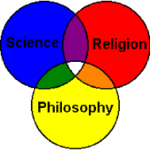 Nonetheless, Easwaran has, in a surprisingly ecumenical fashion, developed a structure for a meaningful life with respect to the four essential components I have identified in my own deliberations: ethics, contentment, purpose, and relationship to ultimate reality. Religion, science, and practical philosophy converge in Easwaran’s formulation. No one else to my knowledge has so clearly demonstrated the correspondence of the three any better. Readers will disregard his model at their own risk… So much to think about.
—————————————————-
79Easwaran, Eknath, Meditation. Nilgiri Press, Tomales, California, 1991. ISBN 0-915132-67-2 – the book’s subtitle.
80Ibid. page 4.
81Ibid. page 14.
82Ibid. pages 68-70.
83Ibid. page 27.
—————————————–
Having trouble leaving a question or comment? E-mail me at gregoryciliberti@gmail.com


