
We continue with more penetrating quotes from the Zohar.
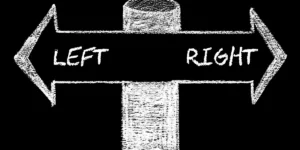 “The wisdom of Moses: he contemplated this, gazing into the act of Creation. In the act of Creation, a conflict arose between left and right, and in that conflict aroused by the left, Hell emerged, clinging there. The central pillar, who is the third day, entered between them, mediating the conflict, reconciling the two sides.”27
Mr. Matt: ‘the central pillar’ is “Tif’eret, symbolized by the third day of Creation, who mediates between the polar opposites, Hesed and Gevurah.”28
My thoughts: ‘right’ symbolizes moral goodness and ‘left’ evil agency (‘Hell’ and sin). We see that, as in other systems, good and evil were instantiated in reality from the beginning. The ability to distinguish between good and evil and the capacity to act on that distinction, inform ethics, the third divine attribute. The conflict between right (Hesed or good/compassion) and left (Gevurah or evil/severe judgment)29 mirrors the ‘Strife’ and ‘Love’ of Empodecles. However, the Kabbalist adds Tif’eret, (Throne of God) as the divine persona which alone can fully mediate between them.
 “God said ‘Let the earth bring forth living beings, according to their kind (Genesis 1:24) – all the other creatures, each according to its kind.”30
Mr. Matt: ‘all the other creatures’ refers to those “created on the sixth day, or all the other angelic powers, who derive from Shehkinah.31
My thoughts: Here I see ‘living beings’ more representationally; the deity is the origin of ‘life’ and thus of the will (conscious self-directed activity) intrinsic to at least some living things, but not applicable to inanimate things.32 Life with its accompanying willful behavior seems ‘miraculous’ by virtue of its unexpectedness within a physicalist universe, and thus life (will) illustrates the fourth divine attribute.
 “Let us make a human being in our image, according to our likeness (Genesis 1:26) embracing six aspects comprising all, as above …arrayed fittingly in the mystery of wisdom, and entirely supernal array. Let us make a human being – mystery of male and female, entirely in supernal, holy wisdom. In our image, according to our likeness – to be consummate by one another, so that he will be unique in the world, ruling over all.”33
Mr. Matt: ‘embracing six aspects’ means “Reflecting the structure of the cosmos where six directions are specified: above, below, east, west, north, and south…The six aspects also represent the core of the sefirot, composed of Tif’eret together with the five sefirot from Hesed through Yesod…”34 And ‘mystery of male and female’ references “The original human being was androgynous, reflecting the masculine and feminine aspects of the sefirot, Tif’eret and Shekhinah, who together constitute the image and likeness of God.”35 Last, ‘ruling over all’ – “What is the meaning of: In our image, according to our likeness? Similar to us, that he will rule below as I do above.”36
My thoughts: The Kabbalist differentiates humans from other living things in this passage. Humans, unlike other animals, capture key divine features including compassion and judgment which are the principles underlying moral choice – humans alone on earth participate in the divine attribute of ethics. ‘Male and female’ in this quote refers not only to different genders among humans, but also inherent traits within us – for example, our good and evil impulses. Wisdom is the fulcrum on which rest the scales of justice and ethics.
(sixth continuation next post)
—————————————–
27Matt, Daniel C. (translator), The Zohar – Pritzker Edition. Stanford University Press, Stanford, California, 2004. ISBN 0-8047-4747-4, page 128.
28Ibid.
29Hell is both evil in the attributive sense, i.e. an evil place, and the destination of those judged to have committed evil actions that justify placement there by the deity.
30Ibid,, page 252.
31Ibid.
32Will is contained in the word ‘soul’ for the Kabbalist as it was for Aristotle.
33Ibid,, page 253.
34Ibid.
35Ibid.
36Ibid.
—————————————–
Having trouble leaving a question or comment? E-mail me at gregoryciliberti@gmail.com


