
 Last time I discussed how ultimate reality for Schopenhauer is Will and also that the world is an Idea arising within the human mind. Schopenhauer is, for many, the greatest philosophical pessimist in history because on his account: the all-controlling Will is a purposeless, striving and yearning without rhyme or reason. It is insatiable or only briefly satiable, and is seemingly inescapable. Free will then can be reduced to the dubious freedom to suffer from an unquenchable will.
Schopenhauer must have thought long and hard about this dilemma seeking an exit. For instance he considers and rejects suicide since that too is merely the playing out of Will (the desire to be free of the torment). He eventually discovers the solution in the ancient Eastern tradition of the Upanishads, while adding a distinctly Western flavor. Instead of the esoteric practice of meditation, Schopenhauer thinks we can neutralize the will by deep identification with objects and the Ideas or Forms.
Stepwise relief (salvation?) comes first from knowledge of the world as the stage of suffering and second by transcending the world of necessity via the intellect which may “wrench itself free from will.” Under happy circumstances “the subject ceases to be merely individual and becomes the pure, will-less subject of knowledge.”5  This is most demonstrable in ‘the aesthetic state’ because aesthetic gratification is pure and leads us to the Ideas. Art, by the genuine artist, and perhaps Beauty in general, is as Kant taught us, “what happens without interest (Schopenhauer thinks this means ‘without reference to the will’). By concentration on the aesthetic we can reach “a state of selfless resignation, where reference was [is] to things as sheer ideas, no longer as purposes; and a peace…the painless state praised by Epicurus.”6 And finally, Schopenhauer believes the most pure of all art is music and therein may be the greatest escape available.
(further continued next post)
—————————————————————-
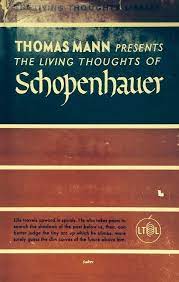
5Mann, Thomas (editor), The Living Thoughts of Schopenhauer. David McKay Company, Philadelphia, PA, 1939. Page 13.
6Ibid., page 14.


Am not certain ALL reality IS ultimate. Much of it is, white snow; wet water :gravity(?), etc. Much reality encountered now is man-made. My assessment of that is it is contextual, based in interests, motives and preferences. This is not new, and has, no doubt, been labelled in a dozen different ways. Or more. It has been claimed, life is what we make it, meaning it is contextual. Uh huh. There we go.
Best Wishes.
There is no ultimate reality. just as there is no infinitely.
Liked reading the philosopher’s take on will. For me, *ultimate reality* encompasses facts and physics. Water is wet, ice is really cold water, steam is an altered state, brought on by heat. Water vapor is sublimation. Physics, mostly. Then, we have reality, according to sentient life: human beings. Such realities are contextual. These depend on who is talking—to whom, and about what. Davidson ranked this as belief. Under his thesis, it is propositional. Insofar as different people believe different things, then, reality there depends on context. There is nothing ultimate about it.
Paul,
Thanks for your comments.
To some extent I agree there is no ultimate reality as it is merely a human construct around our experience of the world. However, I think there is value in seeking out the fundamental underpinnings of that world in order to increase our understanding and to identify some higher level experience available to a creature with human level of intelligence and consciousness.
it is clear that since at least the early period of human civilization, great thinkers such as the Upanishads, Lao Zi, Plato, the Psalmist, and Jesus have indicated a life-transforming (and thus meaningful) experience lurks at the interface of human consciousness and some more ethereal or transcendental reality. My purpose is to examine as many different descriptions as possible to distill out the common thread or threads and reformulate them for the philosopher’s purposes of enhancing the meaning of life.
In earlier blogs I did a detailed analysis of the scientific or purely empirical viewpoint, but even there we find evidence that these thinkers interpolate something ultimate. Of course, you cannot be wrong in denying an ultimate reality, but I suspect that all of us have some prehension of what I am calling ultimate reality. In that case, we neglect identification with it at our own expense.
Regards,
Greg