
“A human being is a part of the whole, called by us “Universe,” a part limited in time and space. He experiences himself , his thoughts and feelings as something separated from the rest – a kind of optical delusion of his consciousness. This delusion is a kind of prison for us, restricting us to our personal desires and to affection for a few persons nearest to us. Our task must be to free ourselves from this prison by widening our circle of compassion to embrace all living creatures and the whole of nature in its beauty” – Albert Einstein1
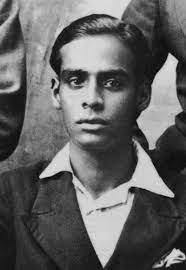 After examining Hinduism from the standpoint of its ancient scriptures and great medieval thinkers, we jump forward eight centuries to a contemporary teacher in this tradition, Eknath Easwaran (1910-1999). Born in India, Easwaran knew Mahatma Gandhi when he was a young man, came to the U.S in 1959 on the Fulbright Program at the University of Minnesota, and later transferred to the University of California, Berkeley. There he founded the Blue Mountain Center of Meditation in 1961 and later established the Nilgiri Press which published over 30 of his books including translations and interpretations of the Bhagavad Gita and the Upanishads. I became aware of him about 20 years ago when I purchased his life-changing book, Meditation. I purchased his translation of the Bhagavad Gita two years ago, and was gifted earlier this year his three volume set, The End of Sorrow, Like a Thousand Suns, and To Love is to Know Me – subtitled The Bhagavad Gita for Daily Living. These five texts will be the source books for the next five blogs on Easwaran’s interpretation of ultimate reality.
 Before we begin, I think it best to tell the reader that Easwaran takes a quite ecumenical approach in his interpretative process – often referencing Western, Christian, Moslem, and Buddhist thinkers.2 He appears to believe there is a concordance in much human religious, spiritual, and philosophical thought, along the lines of Thomas Huxley’s concept of ‘the perennial philosophy.’ So while I think we are correct in calling him a Hindu thinker, it is perhaps more accurate to say he is an Indian thinker who explores and promulgates a universal human religion and philosophy through the lens of Hinduism.
For Easwaran, ultimate reality (and human participation therein) appears to distill into five categories or nuances: metaphysics, God, cosmology, the unity of life, and meditation. However, all five are intertwined within a single phenomenon, Brahman. In the coming blogs, I will examine each manifestation separately, then re-assemble them, and finally offer some personal comments.
(continued next post)
—————————————————-
1Easwaran, Eknath, Meditation. Nilgiri Press, Tomales, California, 1991. ISBN 0-915132-67-2, page 25.
2For example, he suggests Christian psalms and Moslem prayers as foci for meditation equivalent to Hindu ones.
—————————————–
Having trouble leaving a question or comment? E-mail me at gregoryciliberti@gmail.com


